
|
|
| DEUTSCHLAND | GERMANY |
| Bundesland: Berlin |
map →
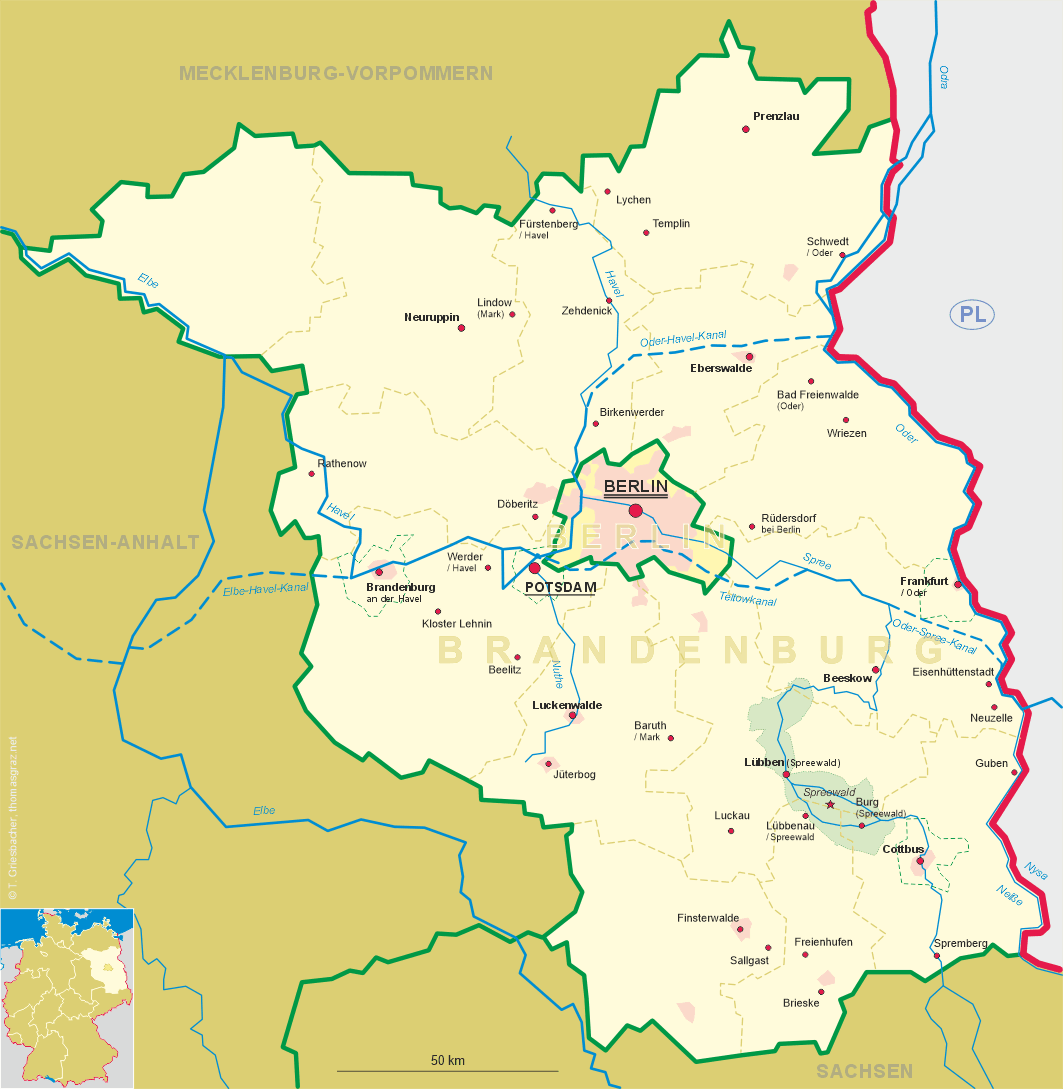
Berlin is the capital, the most populous and largest city of Germany. The city of Berlin is also one of Germany's sixteen federal states. It covers an area of 891.8 km² and has a population of about 3.4 million (2005).
Cölln on the Spree island was first mentioned in a document of 1237. The earliest written mention of Berlin, located on the northern bank of the Spree river, is found in a document of 1244. Both towns received a common town hall in 1307. Contrary to popular belief, and although the city crest shows a bear, the name Berlin is not derived from the name of the animal ('Bär' in German), but most likely is derived from the Slavic syllable 'berl', which refers to a swampy area. In 1415 Friedrich I became Elector of Brandenburg. In 1451 Berlin was chosen as the official residence town and lost its status as a member of the Hanse federation of trading towns. Members of the House of Hohenzollern resided in Berlin until 1918, at first as margraves and electors of Brandenburg, since 1701 as Kings in Prussia (the title was changed to Kings of Prussia by Friedrich II), and from 1871 until 1918 as German emperors.
In 1710 the cities of Berlin, Cölln, Friedrichswerder, Dorotheenstadt and Friedrichstadt were combined into the new royal residence and capital city of Berlin. In 1861 Wedding, Moabit, and the suburbs towards Tempelhof, Schöneberg, Spandau and other areas were incorporated into Berlin. In 1871 the city became the capital of the newly founded German Empire. The Greater Berlin Act (Groß-Berlin-Gesetz) of 1920 increased the geographical area of Berlin from 66 to 883 km² by the incorporation of the formerly independent cities of Lichtenberg, Schöneberg, Wilmersdorf, Charlottenburg, Neukölln, Cöpenick and Spandau, and further 59 rural communities and 27 estate areas.
After World War II, Berlin was divided into 4 zones controlled by the Allied forces (see map).
While the Federal Repubilc of Germany moved its capital to Bonn, the German Democratic Republic chose (East) Berlin as its capital.
The infamous Berlin Wall was erected by East Germany in 1961. Almost thirty years later, in 1989 the Wall came down under pressure of the East German people.
The following year saw the re-unification of Germany. In 1991, the Bundestag, the first chamber of the German parliament decided, after much debate, to move the capital
of the state back to Berlin. Parliament and government were able to begin their workin the new capital in 1999.
(West-)Berlin was selected to be European City of Culture for 1988 by the Council of the European Union.
Mitte |
 The
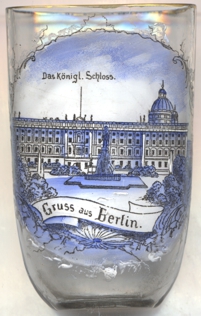
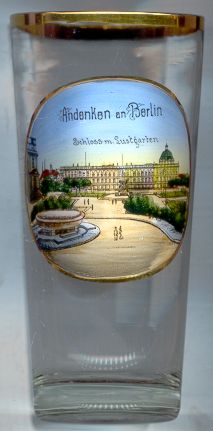
The  Stadtschloss (Berlin City Palace) [left, no. 4353, right, no. 1207, and below, no. 2533]
originally was the winter residence, later the main residence of the Margraves and Electors
of Brandenburg, later Kings in/of Prussia, and finally, after 1871, the German Emperors. The original castle on the Spree Island was founded in 1443 by Elector Friedrich II
('the Iron' or 'Irontooth'). In the 16th century it was replaced by a splendid renaissance residence under Electors Joachim II and Johann Georg.
After the Thirty Years' War the palace had to be restored under Friedrich Wilhelm, the 'Great Elector'. Elector Friedrich III (Friedrich I as King in Prussia since 1701) commissioned
Andreas Schlüter and later Johann Friedrich Eosander to enlarge the residence in splendid Baroque style. Not all plans were carried out, the building was completed under
the more austere Friedrich Wilhelm I. ('the Soldier King'). The characteristic cupola according to a design by Karl Friedrich Schinkel was added by Friedrich August Stüler und
Albert Dietrich Schadow.
Stadtschloss (Berlin City Palace) [left, no. 4353, right, no. 1207, and below, no. 2533]
originally was the winter residence, later the main residence of the Margraves and Electors
of Brandenburg, later Kings in/of Prussia, and finally, after 1871, the German Emperors. The original castle on the Spree Island was founded in 1443 by Elector Friedrich II
('the Iron' or 'Irontooth'). In the 16th century it was replaced by a splendid renaissance residence under Electors Joachim II and Johann Georg.
After the Thirty Years' War the palace had to be restored under Friedrich Wilhelm, the 'Great Elector'. Elector Friedrich III (Friedrich I as King in Prussia since 1701) commissioned
Andreas Schlüter and later Johann Friedrich Eosander to enlarge the residence in splendid Baroque style. Not all plans were carried out, the building was completed under
the more austere Friedrich Wilhelm I. ('the Soldier King'). The characteristic cupola according to a design by Karl Friedrich Schinkel was added by Friedrich August Stüler und
Albert Dietrich Schadow.
The picture on glass no. 4353 [left] shows a view of the northern front of the palace behind the 'Lustgarten' (Pleasure Garden').
The equestrian monument for King Friedrich Wilhelm III [foreground] was created in 1863–1876
by the sculptor Albert Wolff. The moinument was one of the main works of the Berlin school of sculture. During the redesign of the Lustgarten in 1936
it was moved from the centre of the square to the western edge. After being damaged in World War II, the equestrian statue was destroyed in the
era of the German Democratic Republic, except for a few figures that are now displayed at various locations in the city.
[https://de.wikipedia.org/wiki/Reiterstandbild_Friedrich_Wilhelms_III.]
 The palace was severely damaged on 3 February 1945 and burned out. The exterior and supporting walls and staircases survived, making the ruins a veritable sight. Between 1945 and 1950
some parts were restored. Although it would have been feasible to restore the City Palace, the Communist government of East Germany decided that the palace was a symbol of
Prussian absolutism and therefore ordered its demolision. In its place, the "Palast der Republik" was erected in 1973–1976. Gate no. IV of the old palace was preserved
and integrated into the Staatsratsgebäude on the southern end of the square, because Karl Liebknecht on 9 November 1918 had proclaimed the Socialist Republic from its balcony.
After the re-unification of Germany, the Palast der Republik was demolished in 2006–2008, and the reconstruction of the Berlin Palace as "Humboldt
Forum" began in 2013 and was completed in 2020.
The palace was severely damaged on 3 February 1945 and burned out. The exterior and supporting walls and staircases survived, making the ruins a veritable sight. Between 1945 and 1950
some parts were restored. Although it would have been feasible to restore the City Palace, the Communist government of East Germany decided that the palace was a symbol of
Prussian absolutism and therefore ordered its demolision. In its place, the "Palast der Republik" was erected in 1973–1976. Gate no. IV of the old palace was preserved
and integrated into the Staatsratsgebäude on the southern end of the square, because Karl Liebknecht on 9 November 1918 had proclaimed the Socialist Republic from its balcony.
After the re-unification of Germany, the Palast der Republik was demolished in 2006–2008, and the reconstruction of the Berlin Palace as "Humboldt
Forum" began in 2013 and was completed in 2020.
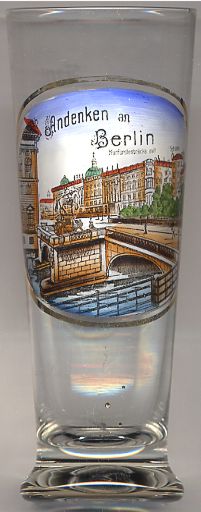
The Kurfürstenbrücke ('Electors' Bridge) [left, no. 2533: foreground right;
and below, no. 3489: top picture]
was built in 1895 replacing the Lange Brücke, which had been built in 1684. The bridge was severely damaged at the end of World War II, only the middle arch
had survived the battles. Immediately after the war, a wooden temporary bridge allowed the crossing of the Spree river. The wooden construction was replaced by a steel bridge
in 1947/1949. In 1951 the bridge was officially renamed Rathausbrücke. When this bridge proved to be not strong enough for the contemporary trafic, it was replaced by yet another steel and concrete bridge, which itself was replaced
by a new construction in 1974. Since then, the bridge was open only to pedestrians and bicycles. In June 2009 the bridge was dismantled and will be replaced
by a new construction.
The equestrian monument for Elector Friedrich Wilhelm ('the Great Elector') [left, no. 2533: center left]
was unveiled in 1703. It was created by the architect an sculptor Andreas Schlüter. During World War II, the equestrian statue was removed to protect it from air raids.
After the war it was found in the Tegeler See. It was then re-erected in front of Charlottenburg Palace.
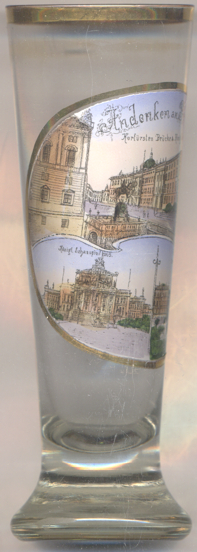
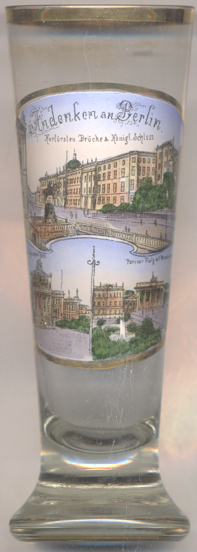
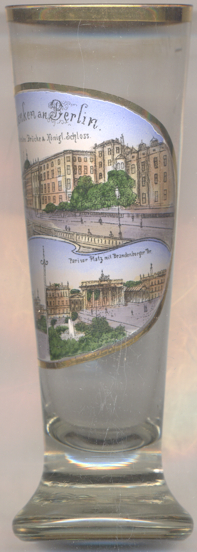
The pictures on glass no. 3489 [left] show:
Kurfürstenbrücke and the royal palace (see above),
the Royal Theatre (today Konzerthaus Berlin, see below), and
the Pariser Platz with the Brandenburg Gate (see below).
The Konzerthaus Berlin [left, no. 3489]
was built in 1818–1821 as the new 'Royal Theatre' (Königliches Schauspielhaus) by the architect
Karl Friedrich Schinkel. During the 1848 Revolution its main auditorium housed the Prussian National Assembly for several
weeks in September, with the Gendarmenmarkt a major arena of political events. After World War I it was renamed
Preußisches Staatstheater (Prussian State Theatre). Severely damaged during World War II by Allied bombing
and the Battle of Berlin the building was rebuilt from 1977 onwards and reopened as the concert hall of the Berlin Symphony
Orchestra in 1984. The exterior, including many of the sculptures of composers by Christian Friedrich Tieck and Balthasar
Jacob Rathgeber, is a faithful reconstruction of Schinkel's designs, while the interior was adapted in a Neoclassical style
meeting the conditions of the altered use. In 1994 the venue was renamed the Konzerthaus Berlin.
[https://en.wikipedia.org/wiki/Konzerthaus_Berlin, https://de.wikipedia.org/wiki/Schauspielhaus_Berlin]
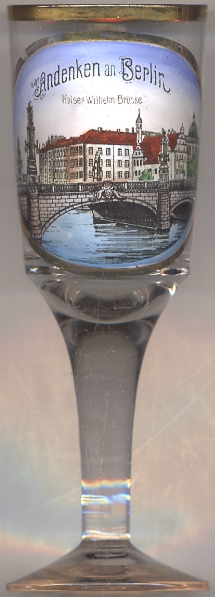
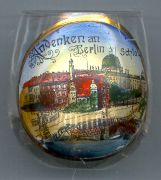 The Kaiser-Wilhelm-Brücke [right, no. 1793: foreground]
was built in 1886–1889 in place of the older Kavalierbrücke which had been built in the 1830s.
The bridge was dismantled in 1939 by the Nazis who planned a new east-west axis through Berlin.
The bronze statues of bears which originally had ornated the obelisks of the bridge, were brought to Hesse for being smelted down. However, the statues were
saved and were sold to the USA after the war. A wooden temporary bridge allowed the crossing of the Spree river until 1944.
A new bridge was built in 1949 and was named Karl-Liebknecht-Brücke. After the fall of the Berlin Wall in 1989 the bridge was renovated, and the
bronze bears were repurchased from the American owners. They were unveiled on the new bridge in 1997.
The Kaiser-Wilhelm-Brücke [right, no. 1793: foreground]
was built in 1886–1889 in place of the older Kavalierbrücke which had been built in the 1830s.
The bridge was dismantled in 1939 by the Nazis who planned a new east-west axis through Berlin.
The bronze statues of bears which originally had ornated the obelisks of the bridge, were brought to Hesse for being smelted down. However, the statues were
saved and were sold to the USA after the war. A wooden temporary bridge allowed the crossing of the Spree river until 1944.
A new bridge was built in 1949 and was named Karl-Liebknecht-Brücke. After the fall of the Berlin Wall in 1989 the bridge was renovated, and the
bronze bears were repurchased from the American owners. They were unveiled on the new bridge in 1997.
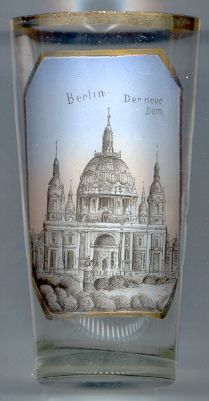
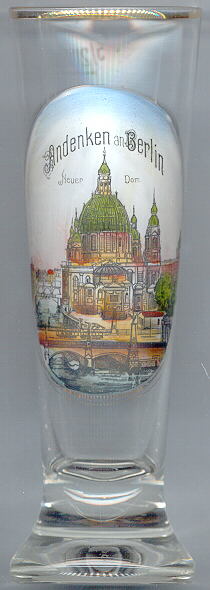
The Protestant Berlin Cathedral (Berliner Dom) was built in 1894–1905 on the Spree Island facing the Lustgarten and the Berlin City Palace.
The first church was built on the site in 1465 as the court chapel for the Hohenzollern family. A Baroque cathedral by Johann Boumann was completed in 1747
and later remodelled in the Classicist style in 1822 by Karl Friedrich Schinkel. Since that church did not meet the representational needs of the court any more,
it was demolished in 1894 and replaced by the current Cathedral designed by Julius Raschdorff. With its dimensions (114 m long, 73 m wide and 116 m tall)
it was much larger than any of the previous buildings and was considered a Protestant counterweight to the St. Peter's Basilica in Rome.
During the Second World War, the building was bombed by the Allies and severely damaged. A temporary roof was installed to protect what remained of the interior and in
1975 reconstruction started. The restoration of the interior was begun in 1984 and in 1993 the church reopened. During reconstruction, the original design was modified
into a more simple form.
[Text adapted from http://en.wikipedia.org/wiki/Berliner_Dom]
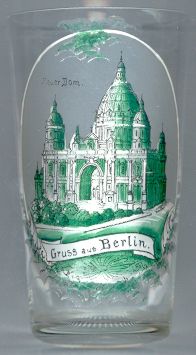
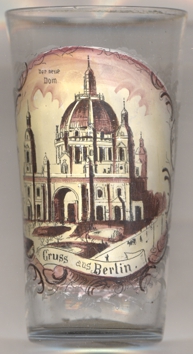
The
The bridge
The
The Museum Island and its museums were listed as a UNESCO World Heritage site in 1999, Berlin Modernism housing estates were listed as such sites in 2008
(see also list of other UNESCO heritage sites depicted on glasses of this collection).
Several glasses of this collection show other monuments for Wilhelm I.
The
The bottom left picture on glass no. 1487 shows the cathedral (see above).
The Humboldt University of Berlin [near left, no. 2608: top picture]
founded in 1810 as the University of Berlin (Universität zu Berlin) by the liberal Prussian educational reformer and linguist Wilhelm von Humboldt,
whose university model has strongly influenced other European and Western universities. From 1828 it was known as the Frederick William University (Friedrich-Wilhelms-Universität),
later (unofficially) also as the Universität unter den Linden. In 1949, it changed its name to Humboldt-Universität in honour of both its founder
Wilhelm and his brother, naturalist Alexander von Humboldt.
The bottom picture on glass no. 2608 shows another view of the cathedral (see above).
While the main design of the Brandenburg Gate has remained the same since it was completed, the gate has played varying roles in Germany's history. First, Napoleon took the
Quadriga to Paris in 1806 after conquering Berlin. When it returned to Berlin in 1814, the statue exchanged her olive wreath for the Iron Cross and became the goddess of victory.
When the Nazis rose to power, they used the gate to symbolize their power. The only structure left standing in the ruins of Pariser Platz in 1945, apart from the ruined Academy
of Fine Arts, the gate was restored in 1956/1957 by the East Berlin and West Berlin governments. However, in 1961, the gate was closed when the Berlin Wall was built. When the
Berlin Wall fell in 1989, the gate symbolized freedom and the unity of the city. It re-opened on 22 December that year when the West German Chancellor Helmut Kohl walked
through to be greeted by the East German Prime Minister, Hans Modrow.
[Text adapted from http://en.wikipedia.org/wiki/Brandenburg_Gate]
Glass no. 3489 [left] shows the City Palace [top picture], the Brandenburg Gate [bottom right picture] and
the Schauspielhaus am Gendarmenmarkt (today Konzerthaus Berlin) [bottom left picture].
The
Glass no. 1850 [left] shows the City Palace [top picture], the Brandenburg Gate [bottom right picture] and
the bridge Jannowitzbrücke [bottom left picture].
The
Glass no. 1967 [right] shows the street Unter den Linden [top picture],
the Potsdamer Bahnhof [bottom left picture] and the bridge Potsdamer Brücke [bottom right picture].
The
The
The
Tiergarten was a separate city borough of Berlin until 2001 when it was amalgamated with the boroughs Wedding and Mitte.
The Reichstag is also depicted on glass no. 091 [right: bottom right picture].
The
Anchored on a solid fundament of polished red granite, the column sits on a hall of pillars with a glass mosaic designed by Anton von Werner. The column itself consists of
three solid blocks of sandstone, which are decorated by cannon pipes captured from the enemies of the aforementioned three wars. A relief decoration on the foundation, which
had to be removed on request of the victorious allied forces in 1945, was restored in the 1980s.
Originally the column was erected with a height of 50.7 m opposite the Reichstag building. In preparation of executing the monumental plans to redesign Berlin,
the Nazis in 1939 relocated the pillar to its present location at the Großer Stern (Great Star), a large intersection on the visual city axis that leads from the former
Berlin City Palace through the Brandenburg Gate to the western parts of Berlin. At the same time, the pillar was heightened by another 7.5 meters, giving it its present height
of 66.9 m (including the statue).The monument survived World War II without much damage. The relocation of the monument probably saved it from destruction, as its old site
in front of the Reichstag was completely destroyed in the war.
[Text adapted from http://en.wikipedia.org/wiki/Berlin_victory_column]
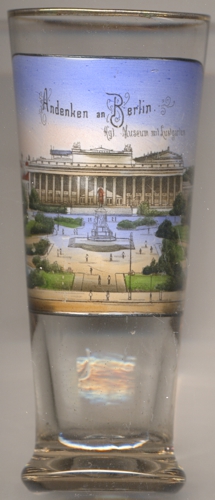
The Altes Museum (Old Museum) [left, no. 4449] was built in 1825–1830 by the architect
Karl Friedrich Schinkel on the Museum Island in the river Spree next to the Royal Palace. It is considered one of the main examples of Classicist style
in Germany. At the time of its completion, it was first known as Königliches Museum ('Royal Museum'). In 1841, King Friedrich Wilhelm IV
announced in a royal decree, that the entire northern part of the Spree Island (now known as Museum Island) "be transformed into a sanctuary for art and
science". In 1845, with the completion of the Neues Museum (the 'New Museum'), the Royal Museum was renamed the Altes Museum, the name it holds to
this day. During the era of Nazi Germany, the Altes Museum was used as the backdrop for propaganda, both in the museum itself and upon the parade grounds
of the redesigned Lustgarten. Just before the end of Second World War, the museum was badly damaged when a tank truck exploded in front of the museum, and
the frescoes designed by Schinkel and Peter Cornelius, which adorned the vestibule and the back wall of the portico, were largely lost. After the war, the
building was the first museum of Museum Island to undergo reconstruction and restoration, which was carried out from 1951 to 1966. Following Schinkel's
designs, the murals of the rotunda were restored in 1982. However, neither the ornate ceilings of the ground floor exhibition rooms nor the pairs of columns
under the girders were reconstructed. The former connection to the Neues Museum has also not been rebuilt; instead, an underground passageway connecting
all of the museums of Museum Island was planned as part of the Museumsinsel 2015 renovations.
[https://de.wikipedia.org/wiki/Altes_Museum, https://en.wikipedia.org/wiki/Altes_Museum]
equestrian monument for Friedrich Wilhelm III [foreground] in the Lustgarten was one of the main
works of the Berlin school of sculpture. Created between 1863 and 1876 by Albert Wolff in the classicism and neo-baroque style, it was moved from the
center of the square to the western edge when the pleasure garden was redesigned in 1936. After being damaged in World War II, the equestrian statue
was destroyed during the GDR era, with the exception of individual figures, which are now installed in various places in the city.
[https://de.wikipedia.org/wiki/Reiterstandbild_Friedrich_Wilhelms_III.]
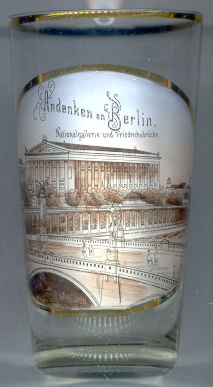
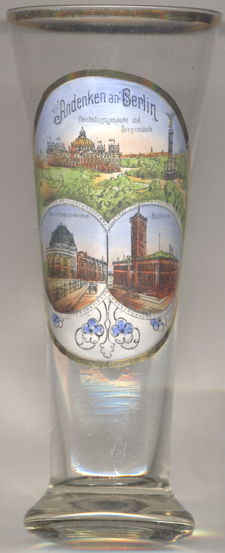
The Alte Nationalgalerie (Old National Galery) [left, no. 1685: background], also located on the
Museum Island, was designed in 1865 by Friedrich August Stüler after a sketch drawn by King Friedrich Wilhelm IV of Prussia. The plans were executed in
1869–1876 under the supervision of Heinrich Strack. The building in the form of a Roman temple was severely damaged in World War II.
The museum was re-opened already in 1949, but the restoration works continued until 1969. A new, thorough restoration was carried out in 1998–2001.
The museum houses the most important works of the 19th century from the collection of the Stiftung Preußischer Kulturbesitz (Foundation Prussian Cultural Heritage).
Friedrichbrücke [foreground] across the Spree river was built in 1769 and was named for
King Friedrich II. Only the four flanking obelisks have remained from that original structure. In 1982 the historic bridge was replaced by a modern prestressed
concrete construction.
Kaiser-Friedrich-Museum, today called Bode-Museum, [right, no. 3508:
bottom left picture] is located on the northwestern end of the Museum Island. It was designed by architect
Ernst von Ihne and completed in 1904. Originally called the Kaiser-Friedrich-Museum after Emperor Friedrich III, the
museum was renamed in honour of its first curator, Wilhelm von Bode, in 1956. Closed for repairs since 1997, the museum was
reopened in 2006 after a €156 million refurbishment. True to the ethos of its founding director, Wilhelm von Bode, who
believed in mixing art collections, it is now the home for a collection of sculptures, Byzantine art, and coins and medals.
[https://en.wikipedia.org/wiki/Bode_Museum]
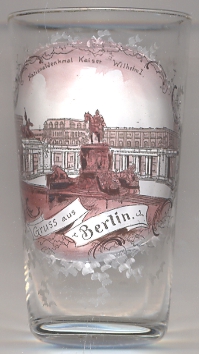
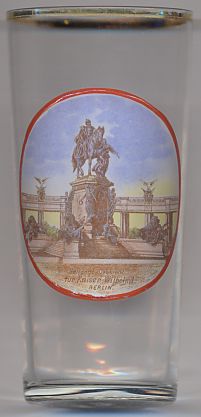
The equestrian monument for Emperor Wilhelm I [left, no. 2953, and right, no. 2176]
was situated in front of the western side of the Stadtschloss. After the death in 1888 of Wilhelm I, the first German emperor, a contest was held in 1889 for the
creation of a national menument. It took a second, controversial, contest in 1891 to finally chose Reinhold Begas as designer for the monument. The surrounding collonade
was created by the architect Gustav Friedrich Halmhuber. The bronze statue of the emperor had a height of 9 m, the total height of the monument was 21 m.
In 1950 the government of the German Democratic Republic ordered the removal of the equestrian statue, only the pedestal remained.
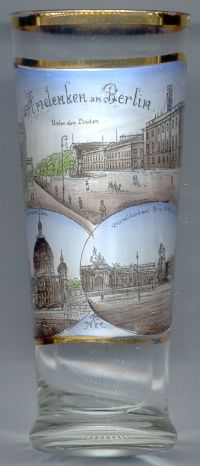
Unter den Linden ('Under the Lindens') [left, no. 1487: top picture], named for its Linden or lime trees which line the
grassed pedestrian mall between the two carriageways, is one Berlin's most famous splendid boulevard. A boulevard of linden trees was planted from 1647 extending from the
electoral palace to the gates of the city by Friedrich Wilhelm, "The Great Elector", who wanted to ride from his castle to his hunting park the Tiergarten with more
Baroque splendor. The section west of the Brandenburg Gate, going through the Tiergarten Park, is called now Straße des 17. Juni, having previously been called
Charlottenburger Straße.
[Text adapted from http://en.wikipedia.org/wiki/Unter_den_Linden]
equestrian monument for Friedrich II [left, no. 1487: bottom right picture] was created by Christian Daniel Rauch.
The reliefs on the pedestal show 74 generals and philosphers. The founding stone as laid on 1 June 1840, the 100th anniversary of Friedrich's accession; the
monument was finally completed in 1851.
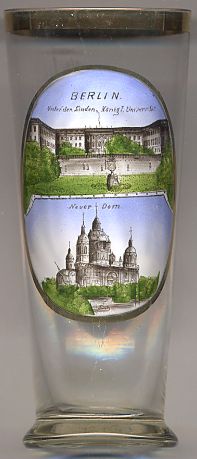
Depicted on the glass is a view of the main
[Text adapted from http://en.wikipedia.org/wiki/Humboldt_University, https://de.wikipedia.org/wiki/Palais_des_Prinzen_Heinrich]
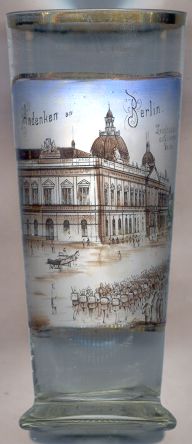
The Zeughaus (old arsenal) [right] is the oldest structure on the boulevard Unter den Linden. It was erected between 1695 and 1706
Baroque style, to be used as an artillery arsenal. It was built to the plans of Johann Arnold Nering; after his death, Jean de Bodt and Andreas Schlüter supervised the works.
The building was transformed into a military museum in 1875. From 1949–1965 the Zeughaus was restored after heavy war damage, the interior being completely redesigned.
Today the Zeughaus is the site of the German Historical Museum (Deutsches Historisches Museum).
[Text adapted from http://en.wikipedia.org/wiki/Zeughaus]
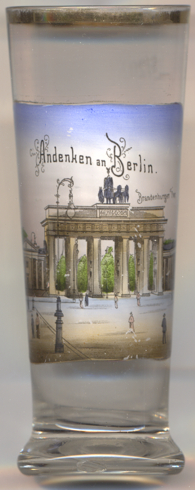
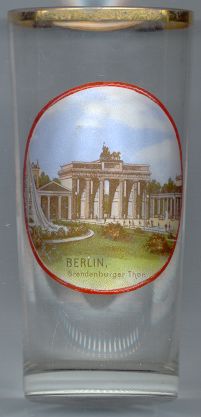
The Brandenburger Tor (Brandenburg Gate) [left, no. 3711, and right, no. 1391]
is the symbol of Berlin. Located on the Pariser Platz, it is the only remaining one
of the series of gates through which one once entered Berlin. It constitutes the monumental termination of Unter den Linden, the renowned boulevard of linden trees which led
directly to the royal residence. The gate, commissioned by Friedrich Wilhelm II as a sign of peace, was built by Carl Gotthard Langhans in 1788–1791 in early Classicist
style. The design of the gate was based on the Propylea, the gateway to the Acropolis in Athens, Greece. It consists of twelve Greek Doric columns, six on each side. This allows
for five roadways, although originally ordinary citizens were only allowed to use the outer two. Above the gate is the Quadriga, consisting of the goddess of peace, driving a
four-horse chariot in triumph. The gate stands 26 m high, 65.5 m wide and 11 m thick.
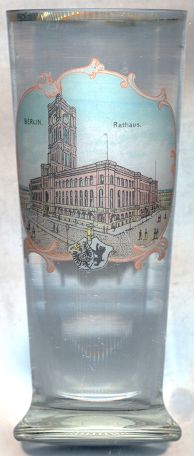
The Berlin Town Hall, also called Rotes Rathaus ('Red Town Hall') [right] in Rathausstraße is
the seat of the city administration and of the mayor of Berlin. Its popular name is derived from the red clinker that was used for its façade. The
town hall was built in 1861–1869 by the architect Hermann Friedrich Wäsemann. The design of the tower (74 m high) was based on that of the
towers of the cathedral of Laon in France. After World War II it was home of the municipal administration for East Berlin,
while that of West Berlin took its seat in the Schöneberg Town Hall. Since 1991 it is again the seat of the administartion for the re-unified city of
Berlin.
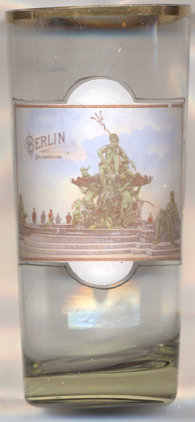
The Neptun Fountain [left, no. 3714], original name Schlossbrunnen (Palace Fountain)
[left, no. 3714] was built in 1891 and was designed by Reinhold Begas. The Roman god Neptune is in the
center. The four women around him represent the four main rivers of Prussia at the time the fountain was constructed: the
Elbe (with the allegorical figure holding fruits and ears of corn), Rhine (fishnet and grapes), Vistula (wooden blocks,
symbols of forestry), and Oder (goats and animal skins). The Vistula is now entirely in Poland, while the Oder (Polish: Odra)
forms the border between Germany and Poland. The fountain was removed from its original location at the Schlossplatz in 1951,
when the former Berliner Stadtschloss (Berlin City Palace, see there) there was demolished.
Eventually, after being restored, the fountain was moved in 1969 to its present location between the St. Mary's Church
and the Rotes Rathaus (see there).
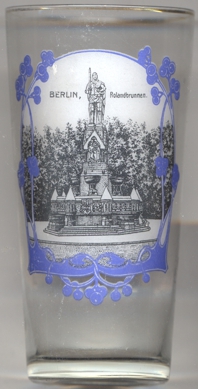
The Roland Fountain [near left, no. 4328]
was a monumental fountain on Kemperplatz in Berlin-Tiergarten . The gift of Kaiser Wilhelm II to his city of residence, inaugurated in 1902,
formed the southern end of the Siegesallee in the Großer Tiergarten. Like the Siegesallee, the missing Kaiser Wilhelm National Monument (see
there) and the Bismarck National Monument (see there) originally erected in front
of the Reichstag building (see there), the fountain designed by Otto Lessing was part of the imperial monument program for
the capital of the German Empire. The remains of the fountain, which was badly damaged in World War II, were cleared around 1950.
[https://de.wikipedia.org/wiki/Rolandbrunnen_(Berlin)]
Schauspielhaus am Gendarmenmarkt (Konzerthaus Berlin) [bottom left picture]
is situated on Gendarmenmarkt square, today housing the Konzerthausorchester Berlin. Built as a theatre from 1818 to 1821
under the name Schauspielhaus Berlin, later also known as Theater am Gendarmenmarkt and Komödie, its
usage changed to a concert hall after World War&nnbsp;II and its name changed to its present one, Konzerthaus Berlin,
in 1994. The building's predecessor, the National-Theater in the Friedrichstadt suburb, was destroyed by fire in 1817.
The new hall was designed by Karl Friedrich Schinkel between 1818 and 1821. The new Königliches Schauspielhaus
was inaugurated on June 18, 1821. After World War I it reopened under the name of Preußisches Staatstheater
Berlin in October 1919. Severely damaged during World War II by Allied bombing and the Battle of Berlin, the
building was rebuilt from 1977 onwards and reopened as the concert hall of the Berliner Sinfonie-Orchester in 1984.
[https://en.wikipedia.org/wiki/Konzerthaus_Berlin]
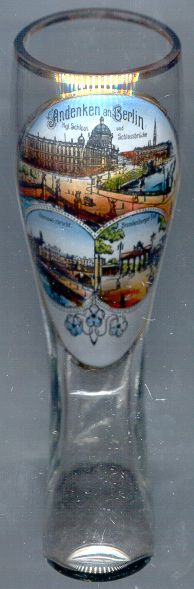
 Jannowitzbrücke [left, no. 1850: bottom left picture] across the river Spree was originally built in
1822. In 1835 the bridge was named for cotton factory owner August Alexander Jannowitz who had founded an association for raising the money for the construction.
A new bridge was constructed in 1881–1883. This bridge is depicted on the glass. The bridge was demolished when the metropolitan railway was built. In its place
a third bridge was built and was opened, together with the metro station Jannowitzbrücke in 1930. Towards the end of World War II it was blown up. The remains
were removed only in 1950/1951. The present bridge was constructed in 1952–1954.
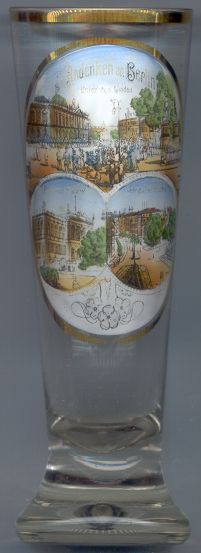
Potsdamer Bahnhof [right no. 1967: bottom left picture]
was thr first railway station in Berlin, opening in 1838 and linking Berlin to Potsdam. It was
located at Potsdamer Platz, about 1 km south of the Brandenburg Gate, and kick-started the transformation of
Potsdamer Platz from an area of quiet villas near the south-east corner of the Tiergarten into the bustling focal point
that it eventually became. For more than a century it was the terminus for long-distance and suburban trains.
The first Potsdamer Bahnhof lasted until 1869, when it was superseded by a far grander structure in response to growing
traffic. Opened on 30 August 1872, it eventually handled train services to and from Cologne,
Paris, Frankfurt am Main, Strasbourg and
Aix en Provence. By 1890 over 3 million people a year were using it, and it was holding its own against a larger
rival down the road (the Anhalter Bahnhof). Still the facilities could not cope, and so in 1890–1891 two additional
termini were built on either side of it for short-haul and suburban traffic: the Ringbahnhof on the eastern side
and the Wannseebahnhof on the western side. The main façade shown on glass no. 1967 [right]
dates from that period. During World War II the terminus, like most of Berlin, was devastated by British and American
bombs and Soviet artillery shells. Despite some rubble clearance and emergency repairs, it and the Ringbahnhof finally
closed in 1944. Shortly after war's end the Ringbahnhof got a reprieve of sorts, temporarily reopening as terminus of
the Wannseebahn trains, but closing for good in 1946. ALthough the West-Berlin districts of Kreuzberg and Tiergarten
lay on either side of it, the station and adjacent tracks remained part of the Soviet occupation zone. Above ground
the remains of the terminus were cleared away in stages between 1957 and 1960.
Jannowitzbrücke [left, no. 1850: bottom left picture] across the river Spree was originally built in
1822. In 1835 the bridge was named for cotton factory owner August Alexander Jannowitz who had founded an association for raising the money for the construction.
A new bridge was constructed in 1881–1883. This bridge is depicted on the glass. The bridge was demolished when the metropolitan railway was built. In its place
a third bridge was built and was opened, together with the metro station Jannowitzbrücke in 1930. Towards the end of World War II it was blown up. The remains
were removed only in 1950/1951. The present bridge was constructed in 1952–1954.
Potsdamer Bahnhof [right no. 1967: bottom left picture]
was thr first railway station in Berlin, opening in 1838 and linking Berlin to Potsdam. It was
located at Potsdamer Platz, about 1 km south of the Brandenburg Gate, and kick-started the transformation of
Potsdamer Platz from an area of quiet villas near the south-east corner of the Tiergarten into the bustling focal point
that it eventually became. For more than a century it was the terminus for long-distance and suburban trains.
The first Potsdamer Bahnhof lasted until 1869, when it was superseded by a far grander structure in response to growing
traffic. Opened on 30 August 1872, it eventually handled train services to and from Cologne,
Paris, Frankfurt am Main, Strasbourg and
Aix en Provence. By 1890 over 3 million people a year were using it, and it was holding its own against a larger
rival down the road (the Anhalter Bahnhof). Still the facilities could not cope, and so in 1890–1891 two additional
termini were built on either side of it for short-haul and suburban traffic: the Ringbahnhof on the eastern side
and the Wannseebahnhof on the western side. The main façade shown on glass no. 1967 [right]
dates from that period. During World War II the terminus, like most of Berlin, was devastated by British and American
bombs and Soviet artillery shells. Despite some rubble clearance and emergency repairs, it and the Ringbahnhof finally
closed in 1944. Shortly after war's end the Ringbahnhof got a reprieve of sorts, temporarily reopening as terminus of
the Wannseebahn trains, but closing for good in 1946. ALthough the West-Berlin districts of Kreuzberg and Tiergarten
lay on either side of it, the station and adjacent tracks remained part of the Soviet occupation zone. Above ground
the remains of the terminus were cleared away in stages between 1957 and 1960.
[https://en.wikipedia.org/wiki/Berlin_Potsdamer_Bahnhof]
Potsdamer Brücke [right no. 1967: bottom right picture] across the Landwehr canal was built in 1898. The bridge was destroyed in 1944.
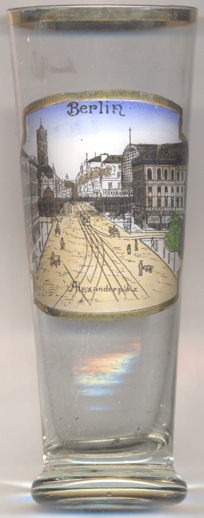 Alexanderplatz [left], by Berliners often simply called Alex,
is located in the northeastern part of the district Mitte. The square was originally (1701) called
Platz vor dem Königs-Thor and was renamed Alexanderplatz in 1805 in honour of Czar Alexander I.
The square gained a prominent role in the late 19th century with the construction of the Stadtbahn station of the
same name and a nearby market hall, becoming a major commercial centre. The U-Bahn station of the present-day U2 line
opened inn 1913. Its heyday was in the 1920s, when together with Potsdamer Platz it was at the heart of Berlin's nightlife,
inspiring Alfred Döblin's 1929 novel 'Berlin Alexanderplatz'. About 1920 the city's authorities started a
rearrangement of the increasing traffic flows laying out a roundabout, accompanied by two buildings along the Stadtbahn
viaduct, Alexanderhaus and Berolinahaus finished in 1932 according to plans designed by Peter Behrens.
Destroyed during World War II, it was subject to redevelopment several times, most recently during the 1960s,
when it was turned into a pedestrian zone.
[https://de.wikipedia.org/wiki/Alexanderplatz, https://en.wikipedia.org/wiki/Alexanderplatz]
Alexanderplatz [left], by Berliners often simply called Alex,
is located in the northeastern part of the district Mitte. The square was originally (1701) called
Platz vor dem Königs-Thor and was renamed Alexanderplatz in 1805 in honour of Czar Alexander I.
The square gained a prominent role in the late 19th century with the construction of the Stadtbahn station of the
same name and a nearby market hall, becoming a major commercial centre. The U-Bahn station of the present-day U2 line
opened inn 1913. Its heyday was in the 1920s, when together with Potsdamer Platz it was at the heart of Berlin's nightlife,
inspiring Alfred Döblin's 1929 novel 'Berlin Alexanderplatz'. About 1920 the city's authorities started a
rearrangement of the increasing traffic flows laying out a roundabout, accompanied by two buildings along the Stadtbahn
viaduct, Alexanderhaus and Berolinahaus finished in 1932 according to plans designed by Peter Behrens.
Destroyed during World War II, it was subject to redevelopment several times, most recently during the 1960s,
when it was turned into a pedestrian zone.
[https://de.wikipedia.org/wiki/Alexanderplatz, https://en.wikipedia.org/wiki/Alexanderplatz]
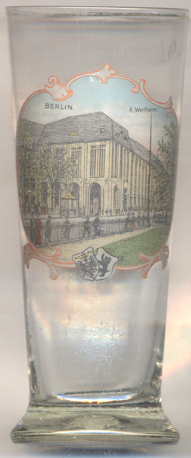 The Wertheim department store in Leipziger Platz [near left, no. 3565]
was constructed in 1896 and was the Wertheim chain's most famous store. It featured 83 elevators and a glass-roofed atrium,
and was one of the three largest department stores in Berlin. The building was badly damaged in World War II and fell
in the no man's land between East and West Berlin after the division of the city. The ruins were demolished in the 1950s.
The chain was founded by Georg Wertheim and operated four stores in Berlin, one in Rostock, one
in Stralsund (where it had been founded) and one in Breslau (today Wrocław,
Poland). The company was subjected to the Nazi Aryanization policies in the 1930s. Jewish employees were forced from their
positions by government mandate. The Wertheim family attempted to avoid losing control of the company by making Georg's wife,
Ursula, the principal shareholder, since she was considered "Aryan" under Nazi law. In the end this was unsuccessful, even
though they divorced to keep the shares in purely "Aryan" hands. The family was forced to sell all their shares at reduced
prices to "Aryans" and in 1939 the store was renamed AWAG, an acronym for Allgemeine Warenhandelsgesellschaft A.G. (General
Retailing Corporation).
[https://en.wikipedia.org/wiki/Wertheim_(department_store)]
The Wertheim department store in Leipziger Platz [near left, no. 3565]
was constructed in 1896 and was the Wertheim chain's most famous store. It featured 83 elevators and a glass-roofed atrium,
and was one of the three largest department stores in Berlin. The building was badly damaged in World War II and fell
in the no man's land between East and West Berlin after the division of the city. The ruins were demolished in the 1950s.
The chain was founded by Georg Wertheim and operated four stores in Berlin, one in Rostock, one
in Stralsund (where it had been founded) and one in Breslau (today Wrocław,
Poland). The company was subjected to the Nazi Aryanization policies in the 1930s. Jewish employees were forced from their
positions by government mandate. The Wertheim family attempted to avoid losing control of the company by making Georg's wife,
Ursula, the principal shareholder, since she was considered "Aryan" under Nazi law. In the end this was unsuccessful, even
though they divorced to keep the shares in purely "Aryan" hands. The family was forced to sell all their shares at reduced
prices to "Aryans" and in 1939 the store was renamed AWAG, an acronym for Allgemeine Warenhandelsgesellschaft A.G. (General
Retailing Corporation).
[https://en.wikipedia.org/wiki/Wertheim_(department_store)]
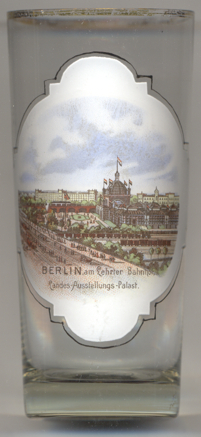 Landes-Ausstellungs-Palast [left: background] was created in 1883 as a
steel-and-glass construction in the crafts exhibition grounds that had been opened in 1879. Exhibitions took place here
until the creation of the Berlin Funkturm in 1925. During the Nazi terror, the SA in 1933 began to use the basements as a
torturing place. Most parts of the complex were destroyed during World War II. Parts of the area today are covered
by the tracks of the station Berlin Hauptbahnhof.
[https://de.wikipedia.org/wiki/ULAP]
Landes-Ausstellungs-Palast [left: background] was created in 1883 as a
steel-and-glass construction in the crafts exhibition grounds that had been opened in 1879. Exhibitions took place here
until the creation of the Berlin Funkturm in 1925. During the Nazi terror, the SA in 1933 began to use the basements as a
torturing place. Most parts of the complex were destroyed during World War II. Parts of the area today are covered
by the tracks of the station Berlin Hauptbahnhof.
[https://de.wikipedia.org/wiki/ULAP]
Tiergarten
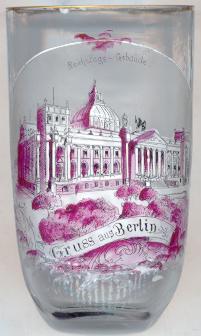
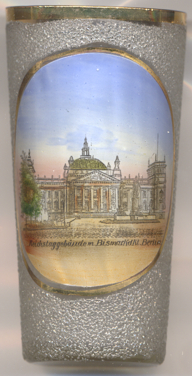 The Reichstag [left, no. 811, and right, no. 3712] is the seat of
the German parliament. An initial architectural contest with 103 participating
architects was carried out in 1872, but due to problems with purchasing property for the new building and arguments between Emperor Wilhelm I, chancellor Otto von Bismarck, and the
members of the Reichstag did not start until some ten years later. A second contest was held in 1882 with 189 architects participating. The winner of this
contest was Paul Wallot from Frankfurt. The construction started in 1884 and was completed in 1894. The original building was most acclaimed for the
construction of an original cupola of steel and glass, a technical masterpiece of the time. The building was home of the Reichstag until 1933.
After Adolf Hitler had been appointed Reichskanzler on January 30, 1933, the building was set on fire on February 27, 1933, under circumstances not yet entirely clear.
This proved to be a valuable excuse for the Nazis to suspend most Human Rights provided for by the 1919 constitution in the Reichstag Fire Decree. During the Nazi period
the building was not used for parliamentary purposes at all. In 1945 the building was severely damaged. Since there was no real use for the building after the war,
it was left in ruins.
The Reichstag [left, no. 811, and right, no. 3712] is the seat of
the German parliament. An initial architectural contest with 103 participating
architects was carried out in 1872, but due to problems with purchasing property for the new building and arguments between Emperor Wilhelm I, chancellor Otto von Bismarck, and the
members of the Reichstag did not start until some ten years later. A second contest was held in 1882 with 189 architects participating. The winner of this
contest was Paul Wallot from Frankfurt. The construction started in 1884 and was completed in 1894. The original building was most acclaimed for the
construction of an original cupola of steel and glass, a technical masterpiece of the time. The building was home of the Reichstag until 1933.
After Adolf Hitler had been appointed Reichskanzler on January 30, 1933, the building was set on fire on February 27, 1933, under circumstances not yet entirely clear.
This proved to be a valuable excuse for the Nazis to suspend most Human Rights provided for by the 1919 constitution in the Reichstag Fire Decree. During the Nazi period
the building was not used for parliamentary purposes at all. In 1945 the building was severely damaged. Since there was no real use for the building after the war,
it was left in ruins.
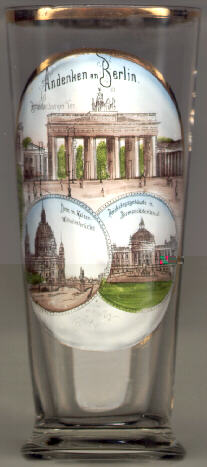 In 1956, after some debate, it was decided that the Reichstag should not be taken down, but instead be restored. Unfortunately, the cupola of the original building,
which had also been heavily damaged in the war, was demolished. Another architectual contest was held, and the winner, Paul Gotthilf Reinhold Baumgarten, reconstructed the building in
1961–1964. Until 1990, the building was used only for occasional representative meetings and for a widely lauded permanent exhibition about German history called
"Fragen an die deutsche Geschichte" ('Questions to German History'). The official German reunification ceremony on October 3, 1990, was held at the Reichstag building, including
President Richard von Weizsäcker, Chancellor Helmut Kohl, former Chancellor Willy Brandt and many others. On June 20, 1991, the Bundestag, the parliament of the Federal
Republic of Germany, concluded with a quite slim majority that both government and parliament should return to Berlin from Bonn. In 1992, Norman Foster won yet another
architectual contest for the reconstruction of the building. His winning concept, however, looked very different from what was actually later executed.
Before reconstruction began, the Reichstag was wrapped by the Bulgarian artist Christo in 1995, attracting millions of visitors. The new glass and steel cupola is now one
of the most visited attractions of Berlin. The first official use of the new Reichstag building was the election in 1999 of the new German president, Johannes Rau, by
the Bundesversammlung ('Federal Assembly'), the combined assembly of Reichstag and Bundestag, the two chambers of the German parliament.
monument
In 1956, after some debate, it was decided that the Reichstag should not be taken down, but instead be restored. Unfortunately, the cupola of the original building,
which had also been heavily damaged in the war, was demolished. Another architectual contest was held, and the winner, Paul Gotthilf Reinhold Baumgarten, reconstructed the building in
1961–1964. Until 1990, the building was used only for occasional representative meetings and for a widely lauded permanent exhibition about German history called
"Fragen an die deutsche Geschichte" ('Questions to German History'). The official German reunification ceremony on October 3, 1990, was held at the Reichstag building, including
President Richard von Weizsäcker, Chancellor Helmut Kohl, former Chancellor Willy Brandt and many others. On June 20, 1991, the Bundestag, the parliament of the Federal
Republic of Germany, concluded with a quite slim majority that both government and parliament should return to Berlin from Bonn. In 1992, Norman Foster won yet another
architectual contest for the reconstruction of the building. His winning concept, however, looked very different from what was actually later executed.
Before reconstruction began, the Reichstag was wrapped by the Bulgarian artist Christo in 1995, attracting millions of visitors. The new glass and steel cupola is now one
of the most visited attractions of Berlin. The first official use of the new Reichstag building was the election in 1999 of the new German president, Johannes Rau, by
the Bundesversammlung ('Federal Assembly'), the combined assembly of Reichstag and Bundestag, the two chambers of the German parliament.
monument
(see also other glasses showing other monuments for Bismarck.)
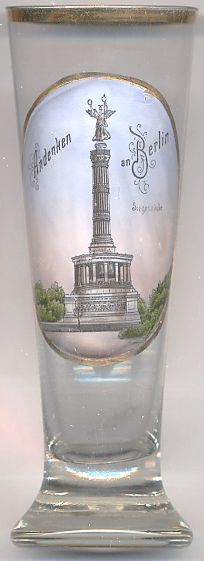
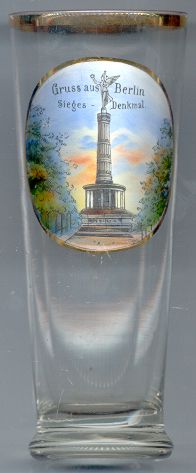 The Siegessäule (Victory Column) is one of Berlin's most famous sights. Designed by Heinrich Strack after 1864 to commemorate the victory of
Prussia in the Danish-Prussian war, by the time it was inaugurated on 2 eptember 1873 Prussia had also defeated Austria in the Austro-Prussian War and France in the
Franco-Prussian War (1870/1871), giving the statue a new purpose. Different from the original plans, these later victories inspired the addition of the bronze sculpture of
Victoria, 8.3 m high and weighing 35 tonnes, designed by Friedrich Drake. Berliners, with their fondness for disrespectful names of famous buildings, call the statue
"Goldelse", meaning something like "Golden Lizzy".
The Siegessäule (Victory Column) is one of Berlin's most famous sights. Designed by Heinrich Strack after 1864 to commemorate the victory of
Prussia in the Danish-Prussian war, by the time it was inaugurated on 2 eptember 1873 Prussia had also defeated Austria in the Austro-Prussian War and France in the
Franco-Prussian War (1870/1871), giving the statue a new purpose. Different from the original plans, these later victories inspired the addition of the bronze sculpture of
Victoria, 8.3 m high and weighing 35 tonnes, designed by Friedrich Drake. Berliners, with their fondness for disrespectful names of famous buildings, call the statue
"Goldelse", meaning something like "Golden Lizzy".
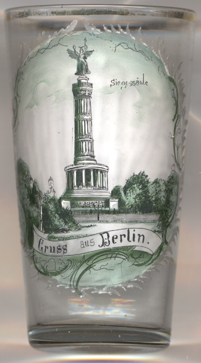
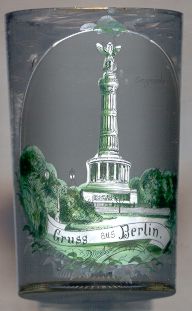
Charlottenburg-Wilmersdorf |
Charlottenburg is located between the rivers Havel and Spree east of the city centre of Berlin and is part of the city borough Charlottenburg-Wilmersdorf. The borough of Charlottenburg-Wilmersdorf covers an area of 64.7 km² and has a population of about 315,100 (2004).
The history of Charlottenburg goes back to the village of Lietzenburg (originally Lietzow, first mentioned in 1239). The city of Charlottenburg was founded in 1706 and was named after Charlottenburg castle. In the 18th century Charlottenburg became a favourite recreation area for the citizens of Berlin. In the 19th century it became a fashionable residential area and finally was the richest city in Prussia. In 1877 Charlottenburg obtained the status of a city that is administered as a district in its own right. On 1 October 1920, Charlottenburg became the 7th city borough of Groß-Berlin (Greater Berlin). On 1 January 2001, the borough of Charlottenburg was amalgamated with the borough of Wilmersdorf.
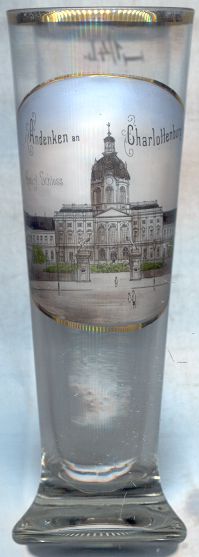
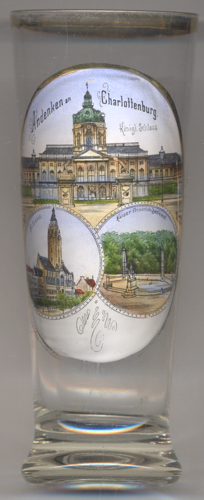 Charlottenburg castle [left, no. 1872, and right, no. 3130: top picture]
was built in 1695–1699 in Italian Baroque style by the architect Johann Arnold Nering for Sophie Charlotte,
consort of Elector Friedrich III of Brandenburg. At that time the castle was still named
Lietzenburg castle. When Friedrich III
in 1701 was crowned King in Prussia (Friedrich I), the castle was enlarged to become a splendid residence. When Queen Sophie Charlotte
died in 1705, the King renamed the castle and the village Charlottenburg. The characteristic tower and the
orangerie were added in 1709–1712. Charlottenburg castle was the original location of the world-famous
Amber Room. Soon after its creation in 1701–1709 King Friedrich Wilhelm I in 1716 gave it to Czar Peter the Great
who installed in the Winter Palace of Sankt Peterburg. Further important extensions of Charlottenburg castle were made
by the architect Georg Wenzeslaus von Knobelsdorff for King Friedrich II. However, in 1747 the king moved his favourite
seat of residence to Sanssouci palace in Potsdam. The final additions to the castle, the castle
theatre and the small orangerie, were finally added by Carl Gotthard Langhans for King Friedrich Wilhelm II.
In 1888, Charlottenburg castle was the residence of the tragic Emperor Friedrich III who ruled only for 99 days.
The castle was severely damaged in 1945 but was restored after the war.
Charlottenburg castle [left, no. 1872, and right, no. 3130: top picture]
was built in 1695–1699 in Italian Baroque style by the architect Johann Arnold Nering for Sophie Charlotte,
consort of Elector Friedrich III of Brandenburg. At that time the castle was still named
Lietzenburg castle. When Friedrich III
in 1701 was crowned King in Prussia (Friedrich I), the castle was enlarged to become a splendid residence. When Queen Sophie Charlotte
died in 1705, the King renamed the castle and the village Charlottenburg. The characteristic tower and the
orangerie were added in 1709–1712. Charlottenburg castle was the original location of the world-famous
Amber Room. Soon after its creation in 1701–1709 King Friedrich Wilhelm I in 1716 gave it to Czar Peter the Great
who installed in the Winter Palace of Sankt Peterburg. Further important extensions of Charlottenburg castle were made
by the architect Georg Wenzeslaus von Knobelsdorff for King Friedrich II. However, in 1747 the king moved his favourite
seat of residence to Sanssouci palace in Potsdam. The final additions to the castle, the castle
theatre and the small orangerie, were finally added by Carl Gotthard Langhans for King Friedrich Wilhelm II.
In 1888, Charlottenburg castle was the residence of the tragic Emperor Friedrich III who ruled only for 99 days.
The castle was severely damaged in 1945 but was restored after the war.
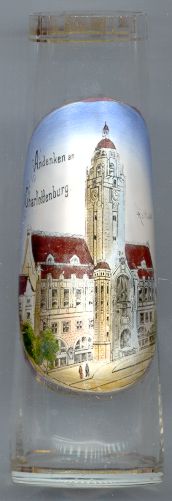 The monumental Charlottenburg Town Hall [left, no. 1701, and above right, no. 3130:bottom left picture]
was built in 1899–1905. An extension, which was already part of the original plans, was realised in 1911–1916.
The height of the tower of the town hall is 88 m which is higher than the height of the dome of Charlottenburg castle.
It is said that Emperor Wilhelm II from then on always took a detour when going to the castle in order to avoid
passing the civil town hall. The building was severely damaged in World War II and was restored in 1947–1952.
The monumental Charlottenburg Town Hall [left, no. 1701, and above right, no. 3130:bottom left picture]
was built in 1899–1905. An extension, which was already part of the original plans, was realised in 1911–1916.
The height of the tower of the town hall is 88 m which is higher than the height of the dome of Charlottenburg castle.
It is said that Emperor Wilhelm II from then on always took a detour when going to the castle in order to avoid
passing the civil town hall. The building was severely damaged in World War II and was restored in 1947–1952.
The monument for Emperor Friedrich III above right, no. 3130: bottom right picture]
in Luisenplatz was created by the sculptor Joseph Uphues and was unveiled in the presence of Emperor Wilhelm II
on 27 May 1905, one week after the inauguration of the Charlottenburg Town Hall. During World War II the monument
was damaged during Allied bomb raids and was then melted down in 1943. The remaining structures of the monument were
removed in 1950.
[https://de.wikipedia.org/wiki/Luisenplatz_(Berlin)]
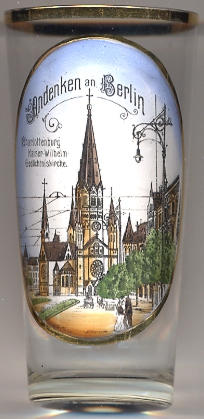 The Kaiser-Wilhelm-Gedächtniskirche (Kaiser Wilhelm Memorial Church) [left]
is located on the Kurfürstendamm in the centre of the Breitscheidplatz.
Emperor Wilhelm II decided to name the church in honor of his grandfather Emperor Wilhelm I.
The foundation stone was laid on March 22, 1891, which was Wilhelm I's birthday.
The competition for the design was won by Franz Schwechten who planned for a large church to be built in Romanesque Revival style, including 2,740 square meters of wall mosaic.
The spire was 113 meters high and the nave seated over 2,000 people. The church was consecrated on 1 September 1895. By this time of the consecration the entrance hall in the
lower section had not been completed. This was opened and consecrated on February 22, 1906. In World War II, on the night of 23 November 1943, the church was irreparably
damaged in an air raid. The church was largely destroyed but part of the spire and much of the entrance hall survived.
The Kaiser-Wilhelm-Gedächtniskirche (Kaiser Wilhelm Memorial Church) [left]
is located on the Kurfürstendamm in the centre of the Breitscheidplatz.
Emperor Wilhelm II decided to name the church in honor of his grandfather Emperor Wilhelm I.
The foundation stone was laid on March 22, 1891, which was Wilhelm I's birthday.
The competition for the design was won by Franz Schwechten who planned for a large church to be built in Romanesque Revival style, including 2,740 square meters of wall mosaic.
The spire was 113 meters high and the nave seated over 2,000 people. The church was consecrated on 1 September 1895. By this time of the consecration the entrance hall in the
lower section had not been completed. This was opened and consecrated on February 22, 1906. In World War II, on the night of 23 November 1943, the church was irreparably
damaged in an air raid. The church was largely destroyed but part of the spire and much of the entrance hall survived.
The present, new church was designed by Egon Eiermann and consists of four buildings grouped around the remaining ruins of the old church. The initial design included the demolition
of the spire of the old church but following pressure from the public, it was decided to incorporate it into the new design. The four buildings comprise, on the west of the ruins,
the new church with a foyer to its west, and to the east of the ruins, a tower with a chapel to its northeast. The plan of the church is octagonal while the plan of the tower is hexagonal.
These components are sited on a plateau measuring 100 metres long and 40 metres wide. The new buildings are constructed of concrete, steel and glass. The walls of the church are made
of a concrete honeycomb containing 21,292 stained glass inlays. The church is 35 metres in diameter and 20.5 metres high with a capacity of over 1,000. Because of the distinctive
appearance of the new buildings, it is sometimes nicknamed "Lippenstift und Puderdose" ('the lipstick and the powder box') by Berliners.
[http://en.wikipedia.org/wiki/Kaiser_Wilhelm_Memorial_Church]
Friedrichshain-Kreuzberg |
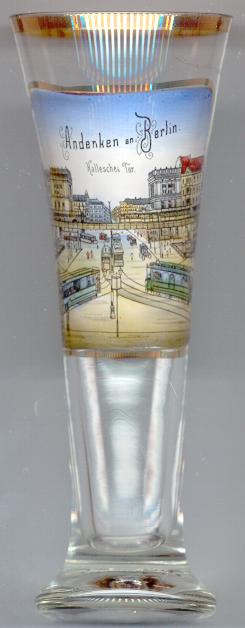
the square Hallesches Tor is located on the site of a former gate of Berlin's toll wall which in the 18th century had replaced the former
fortification. The gate in the southeastern section of the wall opened to the road towards Halle, the main city of the Prussian province Saxony.
The station of the elevated railway, part of the Berlin metropolitan railway, was opened in 1902. The design in Renaissance Revival style
was created by Hermann Solf and Franz Wichards. In 1922/1923 the station was extended by a connection with the North-South railway line. A further extension followed in 1935.
After World War a provisional, wooden station building was erected, the reconstructed elevated station was opened in 1949.
Tempelhof-Schöneberg |
Tempelhof-Schöneberg is the seventh borough of Berlin, formed in 2001 by merging the former boroughs of Tempelhof and Schöneberg. Situated in the south of the city
it shares borders with the boroughs of Mitte and Friedrichshain-Kreuzberg in the north, Charlottenburg-Wilmersdorf and Steglitz-Zehlendorf in the west as well as Neukölln in the east.
Tempelhof-Schöneberg consists of six localities as from north to south: Schöneberg, Friedenau, Tempelhof, Mariendorf, Marienfelde and Lichtenrade.
[http://en.wikipedia.org/wiki/Tempelhof-Schöneberg]
The
Schöneberg
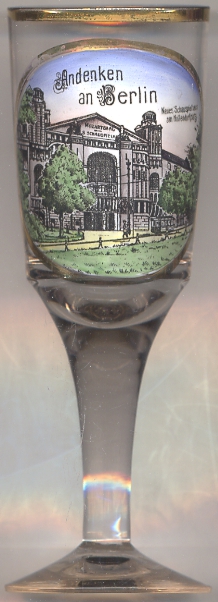 Neues Schauspielhaus (New Theatre) on Nollendorfplatz was built in 1905 as a theatre (with 1,108 seats) and concert hall (the pompously decorated
"Mozartsaal") in the then-fashionable Art Nouveau style. The architect was Albert Froelich.
In 1911 the Mozartsaal was converted into a cinema. From the beginning of World War I the theatre turned into an operetta stage until in 1927, Erwin Piscator and Tilla Durieux opened their
Theater am Nollendorfplatz in the building. Piscator created time-critical performances by playwrights like Ernst Toller and Walter Mehring, with artists like Bertold Brecht,
George Grosz and John Heartfield at times working with him. While the auditorium was destroyed in World War II, the façade as well as the cinema survived and in 1951 was renamed
Metropol. Since 1977 it has been used as a discothèque and became a famous music club during the 1980s heyday of West Berlin. For a short time in 2000 it was the location of
the KitKatClub and in 2005 the architect Hans Kollhoff remodeled the interior as the Goya night club.
[http://en.wikipedia.org/wiki/Neues_Schauspielhaus, https://de.wikipedia.org/wiki/Neues_Schauspielhaus]
Neues Schauspielhaus (New Theatre) on Nollendorfplatz was built in 1905 as a theatre (with 1,108 seats) and concert hall (the pompously decorated
"Mozartsaal") in the then-fashionable Art Nouveau style. The architect was Albert Froelich.
In 1911 the Mozartsaal was converted into a cinema. From the beginning of World War I the theatre turned into an operetta stage until in 1927, Erwin Piscator and Tilla Durieux opened their
Theater am Nollendorfplatz in the building. Piscator created time-critical performances by playwrights like Ernst Toller and Walter Mehring, with artists like Bertold Brecht,
George Grosz and John Heartfield at times working with him. While the auditorium was destroyed in World War II, the façade as well as the cinema survived and in 1951 was renamed
Metropol. Since 1977 it has been used as a discothèque and became a famous music club during the 1980s heyday of West Berlin. For a short time in 2000 it was the location of
the KitKatClub and in 2005 the architect Hans Kollhoff remodeled the interior as the Goya night club.
[http://en.wikipedia.org/wiki/Neues_Schauspielhaus, https://de.wikipedia.org/wiki/Neues_Schauspielhaus]
Neukölln |
Neukölln is the eigth administrative city borough of Berlin, located in the south of the capital city between Tempelhof-Schöneberg to the west, Treptow-Köpenick to the east and Friedrichshain-Kreuzberg to the north. The borough of Neukölln covers an area of 44.9 km² and has a population of about 306,700 (2007). The city borough is named after the former independent town of Neukölln which is located in the northern part of the borough.
The earliest written mention of Richardsdorp in a document dates from 1360; later documents mention the name as Ricksdorf, Riecksdorf and finally Rixdorf. The village at first was owned by the Order of St. John in Jerusalem who took over the village from the Knights Templar who at the time resided in Tempelhof. In 1737 Friedrich Wilhelm I, King in Prussia and Margrave of Brandenburg, permitted Protestant exiles from Bohemia to settle down in Rieksdorf. The Bohemians founded their own settlement, which from 1797 had its own administration under the name Böhmisch-Rixdorf. When two communities were merged in 1874, Rixdorf had already a population of about 8,000. Rixdorf was the largest village in Prussia until 1st May 1899 when it became an independent city district. In 1912 Rixdorf was renamed Neukölln. The reason for renaming the town was that the name Rixdorf had become notorious for criminality and "loose morals". Eight years later, on 1st October 1920, Neukölln was incorporated into Berlin following the Greater Berlin Act. Together with the villages of Britz, Rudow and Buckow it formed the 14th administrative district of Greater Berlin. Since the end of the 20th century there are some ambitions of renaming the district Neukölln back to the original name, Rixdorf. once for distinguishing it from the greater city borough of Neukölln, of which it is part, and secondly because of the greater memorability of the historical name.
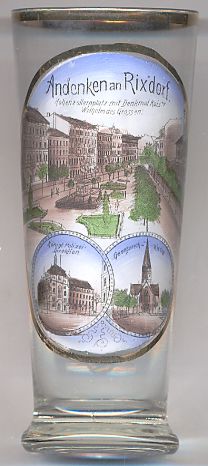 The top picture on glass no. 2444 [left] shows a view of
Hohenzollernplatz monument
The top picture on glass no. 2444 [left] shows a view of
Hohenzollernplatz monument
Several glasses of this collection show other monuments for Wilhelm I.
The building depicted on the bottom left picture is labeled
Königl.
The third picture on the bottom right shows a view of the Protestant
Genezareth-Kirche
Spandau |
Spandau is situated mostly on the west bank of the river Havel in the west of the city of Berlin. The city borough of Spandau covers an area of 91.9 km² and has a population of about 225,700 (2004).
Archaeological finds date the first traces of human settlements back to the 6th century when this area was inhabited by Slavic tribes. The castle Spandow, presumably a foundation of Margrave Albrecht 'the Bear' of Brandenburg, was first mentioned in 1197. The village was chartered as a town in 1232. The modern spelling Spandau was introduced only in 1878. In the 19th century, Spandau became a centre of the German weapons industry. On 1 October 1920, Spandau became the 5th city borough of Groß-Berlin (Greater Berlin). After World war II, Spandau belonged to the British zone of Berlin, with the exception of West-Staaken which was separated from Spandau and became part of the Soviet zone. After the re-unification of Germany in 1990 West-Staaken was again incorporated into the city borough of Spandau. From 1947, the Spandau Prison was used for the imprisonment of Nazi war criminals who were convicted at the Nuremberg trials. After the death in 1987 of the last and most famous inmate, Rudolf Heß, the prison was closed and demolished.
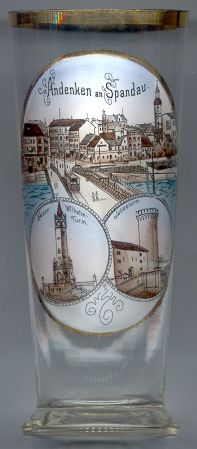
The church Sankt Nikolai [left, no. 1783: picture, right]
was built in the 14th century in Gothic style in place of an older church that had been first mentioned in 1240.
In 1240 the citizens of Spandau had refused to take over the patronage of the church and thus the patronage, which
included the right to choose the parish priest, remained with the Benedictine nunnery of Spandau until the time of
the Reformation. The present church was built from about 1370 until the end of the 14th century; the tower was added
in 1467/1468. The church of St. Nicholas became the cenre of Protestantism after Elector Joachim II converted
to the new faith in 1539. The top of the church tower was rebuilt in Baroque style in 1744.
The Kaiser-Wilhelm-Turm [left, no. 1783: bottom left picture] on the
Karlsberg hill was built in 1897–1898 . The architect was Franz Schwechten.
The tower has a height of 55 m, 202 steps lead up to a platform that offers a splendid view over the area.
The tower was conceived as a monument for Wilhelm I, King of Prussia and first German Emperor.
Today, the tower is called Grunewaldturm.
The Juliusturm [left, no. 1783: bottom right picture, and below, no. 3564: top picture]
is part of the Spandau Citadel. The citadel was built in 1559–1594 in place of a medieval stronghold northeast of the
old town of Spandau, across the river Havel. The Juliusturm is the popular landmark of Spandau. The cylindrical tower has a
height of 30 m. Its age is uncertain but the lower parts of the construction seem to date from the 13th century.
The diameter of the walls is 3.60 m at the base and 2.60 m at the top. The Romantic pinnacles were added
by the architect Karl Friedrich Schinkel in 1838. The origin of the name is also uncertain. The name "Juliusturm"
seems to have evolved around 1400. Before that, the name was "Judenturm".
After the end of the French-German War of 1870/1871, the tower was used to store the "Reichskriegsschatz",
the contribution payments that France was obliged to pay to the victorious Germany. One thousand two hundred cases filled
with gold coins amounting to five milliard French Francs or 120 million Gold Marks were stored here. After World War I,
the treasure was restituted to France in 1919.
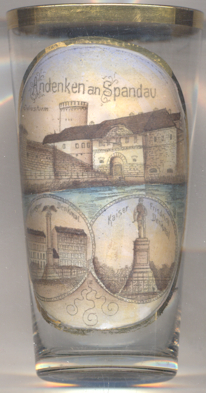
The soldiers' monument [near left, no. 3564: bottom left picture]
was created in 1876 to commemorate the inhabitants of Spandau killed as soldiers during the wars of 1864 (Second
Schleswig War), 1866 (Austro-Prussian War) and 1870/1871 (Franco-Prussian War). In 1918
the eagle on top of the column lost one of its wings and a new eagle was carved in 1919. During World War II,
the monument was completely destroyed.
[https://books.google.de/books?id=32QQZnXv8sYC&pg=PA78&lpg=PA78&dq=spandau+kriegerdenkmal+plantage&source=bl&ots=3nS0AyXjLA&sig=ACfU3U2dt-s5In2DBx0fMB7J4HzFlcuyMg&hl=de&sa=X&ved=2ahUKEwj8o4-LqpvhAhXQhrQKHYvrCK8Q6AEwDnoECAgQAQ#v=onepage&q=spandau%20kriegerdenkmal%20plantage&f=false]
The monument for Emperor Friedrich III [near left, no. 3564: bottom
right picture] was created in 1892. The design was created by the sculptor Albert Manthe. Towards the end of
World War I, the monument was intended to be melted down, but was eventually spared. In 1926 it was removed from its
original location and was reerected in a new place in 1931. During World War II it was finally melted down
in 1941.
[https://de.wikipedia.org/wiki/Denkmäler_in_Spandau#Standbild_Kaiser_Friedrich_III._(1892)]
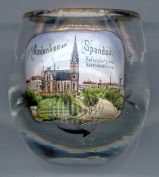
The Protestant Garnisonkirche (Garrison Church) [near left, no. 2020] at
Hafenplatz was built in 1886–1889 in Gothic Revival style by the architect Ernst August Roßteuscher.
The church was destroyed in World War II. The ruins were removed in 1949.
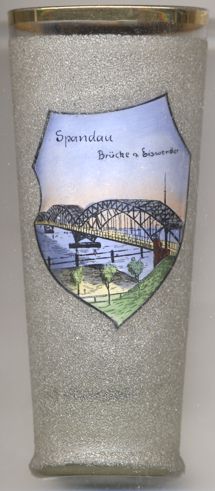
The (large) Eiswerder Bridge [near left, no. 4500] connects the Eiswerder island in the Havel
river with the western bank of the river. In the 19th century, the Eiswerder developed into an important military location due to several armaments
factories: there was a powder factory, a gun foundry, an artillery workshop, a cartridge factory, an ammunition factory and a chemical factory. While
the island was connected in 1892 to the eastern bank of the Havel river by the (small) Eiswerder railway bridge, workers from the western bank of the
river only could reach the armaments factories on the island by ferry, which, however, could not operate when in winter the river carried ice. Hence,
the (large) Eiswerder bridge was built in 1901–1903. The steel truss bridge has a total length of 208 metres, the spans
have a width of 59 metres and the width of the carriageway is 10 metres. At the end of World War II the German Wehrmacht blew up the
bridge in 1945. It was then repaired in 1957–1958. The bridge is protected as an architectural monument.
[https://de.wikipedia.org/wiki/Eiswerderbr%C3%BCcke,
https://web.archive.org/web/20201114232524/https://www.berlin.de/landesdenkmalamt/denkmale/liste-karte-datenbank/denkmaldatenbank/daobj.php?obj_dok_nr=09080560]
Treptow-Köpenick |
| ALT: Cöpenick |
Köpenick is located at the confluence of the rivers Spree and Dahme in the southeast of Berlin and is part of the city borough of Treptow-Köpenick. The borough of Treptow-Köpenick covers an area of 168.4 km² and has a population of about 59,600 (2004).
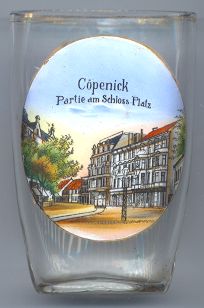 In the mid-12th century the island in the Spree river was the siet of a castle of the Slavic inhabitants of the area.
The name Copnic ('place on the island') was first mentioned in a document of 1209. Köpenick castle was the site
of the law suit for high treason that was initiated in 1734 by Friedrich Wilhelm I, King in Prussia, against his son, the later King Friedrich II (Friedrich the Great).
In the mid-12th century the island in the Spree river was the siet of a castle of the Slavic inhabitants of the area.
The name Copnic ('place on the island') was first mentioned in a document of 1209. Köpenick castle was the site
of the law suit for high treason that was initiated in 1734 by Friedrich Wilhelm I, King in Prussia, against his son, the later King Friedrich II (Friedrich the Great).
On 1 October 1920, Cöpenick became the 16th city borough of Groß-Berlin. The modern spelling Köpenick was introduced in 1931. A sad part of Köpenick's history is the "Köpenicker Blutwoche" of June 1933, when almost five hundred opponents of the Nazis were arrested by the SA; ninety-one of them were murdered. On 1 January 2001, the borough of Köpenick was amalgamated with the borough of Treptow.
The best-know event in Köpenick's history is the "Cöpenickiade" of the shoemaker Hermann Voigt.
Between 1864 and 1891, Voigt was sentenced to prison for a total of 25 years for thefts and forgery. The longest sentence
was a conviction for 15 years for theft. He was released in 1906.
Later that year he purchased parts of used captain's uniforms and tested their effect on soldiers. In Köpenick he went to
the local army barracks, stopped four grenadiers and a sergeant on their way back to barracks and told them to come with him.
Indoctrinated to obey officers without question, they followed. Then he took the soldiers to the Köpenick city hall, and told
them to cover all exits. He had the town secretary and the mayor arrested for suspicions of crooked bookkeeping and
confiscated 4000 marks and 70 pfennigs – with a receipt, of course. Then he commandeered two carriages and told the
grenadiers to take the mayor and the treasurer to Berlin interrogation. He told the remaining guards stand in their places
for half an hour and then left for the train station. In the train he changed to civilian clothes and slipped out.
Voigt was arrested on October 26 and on December 1 sentenced to four years in prison for forgery, impersonating an officer
and wrongful imprisonment. However, much of the public opinion was on his side. Emperor Wilhelm II pardoned him on
August 16, 1908. There are some claims that even the emperor had been amused by the incident. Voigt later appeared in
small theatres and toured in Dresden, Vienna and Budapest
in variety shows, restaurants and amusement parks. In 1909, he published a book about his caper. Voigt died in 1922 in
Luxembourg.
In 1930 German author Carl Zuckmayer wrote a play about it named "Der Hauptmann von Köpenick" ('The Captain of Köpenick'),
several movies were produced about the affair, among others with Heinz Rühmann in 1956, with Rudolf Platte in 1960 (TV) and
Harald Juhnke in 1997.
(Alt-)Treptow is situated south of the Landwehr canal in Berlin's city bourough of Treptow-Köpenick. The area was settled in the 6th or 7th century by Slavic tribes. The earliest mention of Trebow is found in a document of 1568. The official name in 1808 was Gutsbezirk (domain) Treptow. Most parts of the Cöllnische Heide woods were cleared in 1823–1840 and the area soon became a popular place for excursions. The rural community of Treptow was founded in 1876 after the first industrial establishments had moved to this place. In 1876/1877 Treptow Park was laid out after designs by the director of the Berlin municipal gardens, Gustav Meyer. In 1920 Treptow was incorporated into Groß-Berlin (Greater Berlin) and became a city borough. In 2001, the borough of Treptow was amalgamated with the borough of Köpenick.
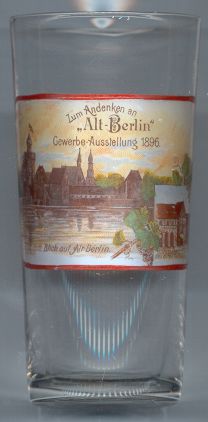
 Glass no. 1349 is a souvenir from the Berliner Gewerbeausstellung (Industrial Exhibition of Berlin) which took place in Treptow Park
in 1896. The exhibit "Alt-Berlin" depicted on the glass was one of the most popular attractions of the exhibition.
It consisted of replicas of scenes from 'Old Berlin'. The bottom right part of the picture depicts the exhibit
"Theil des Alten Rathhauses" (old orthography, 'part of the old town hall').
The only structure from the exhibition which has remained today is
the observatory. The telescope, constructed by the German astronomer Friedrich Simon Archenhold, is still the world's longest moving refracting telescope
with a focal length of 21 m. The original wooden building was replaced by a new structure in 1908. Since 1946 it is named Archenhold-Sternwarte.
Glass no. 1349 is a souvenir from the Berliner Gewerbeausstellung (Industrial Exhibition of Berlin) which took place in Treptow Park
in 1896. The exhibit "Alt-Berlin" depicted on the glass was one of the most popular attractions of the exhibition.
It consisted of replicas of scenes from 'Old Berlin'. The bottom right part of the picture depicts the exhibit
"Theil des Alten Rathhauses" (old orthography, 'part of the old town hall').
The only structure from the exhibition which has remained today is
the observatory. The telescope, constructed by the German astronomer Friedrich Simon Archenhold, is still the world's longest moving refracting telescope
with a focal length of 21 m. The original wooden building was replaced by a new structure in 1908. Since 1946 it is named Archenhold-Sternwarte.
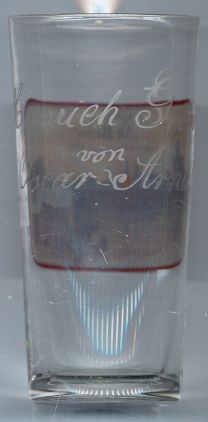
The inscription on the back of the glass reads "Heinrich Grimm von Oscar Arndt".
![[scale]](lineal.jpg)