
|
|
| DEUTSCHLAND | GERMANY |
| Bundesland: Freistaat Sachsen | Saxony |
| Landkreis: Leipzig |
map →
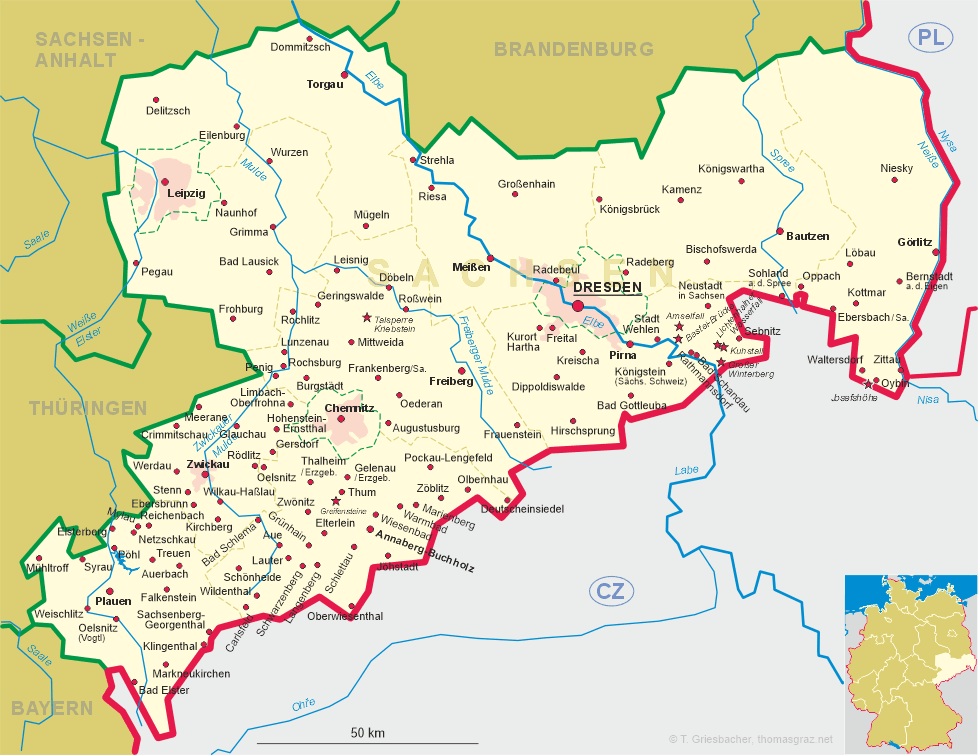
 Wurzen is situated at an elevation of 124 m on the river Mulde in northern Saxony, about 30 km east of
Leipzig. The municipality has a population of about 16,200 (2017).
Wurzen is situated at an elevation of 124 m on the river Mulde in northern Saxony, about 30 km east of
Leipzig. The municipality has a population of about 16,200 (2017).
 Wurzen was first mentioned in document of AD 961 as Vurcine.
The bishops of Meißen founded a collegiate monastery in 1144. Around 1200 Wurzen obtained the status of a town.
In 1487, Wurzen became a residence of the bishops of Meißen. When the town introduced the reformation in 1539 the cathedral and the town's lordship
at first remained Catholic. During the 16th and 17th century the Plague ravaged the town eight times (1519, 1577, 1598, 1599, 1607, 1610, 1626 and 1680).
Of all these years the Plague of 1607 was the worst, killing 1450 of the 5000 inhabitants of Wurzen. Another devastating event for the town was the
occupation by Swedish troops in 1637 during the Thirty Years' War. Although the town payed high ransoms to the Swedes the town was looted and set on fire;
3500 were killed, and of the remaining 1500 who fled the town only 500 returned. It lasted until about 1800 that the town reached a population of even only 2000 again.
The modern development of Wurzen was greatly influenced by the opening of the railroad from Leipzig to Wurzen in 1838/39.
Wurzen was first mentioned in document of AD 961 as Vurcine.
The bishops of Meißen founded a collegiate monastery in 1144. Around 1200 Wurzen obtained the status of a town.
In 1487, Wurzen became a residence of the bishops of Meißen. When the town introduced the reformation in 1539 the cathedral and the town's lordship
at first remained Catholic. During the 16th and 17th century the Plague ravaged the town eight times (1519, 1577, 1598, 1599, 1607, 1610, 1626 and 1680).
Of all these years the Plague of 1607 was the worst, killing 1450 of the 5000 inhabitants of Wurzen. Another devastating event for the town was the
occupation by Swedish troops in 1637 during the Thirty Years' War. Although the town payed high ransoms to the Swedes the town was looted and set on fire;
3500 were killed, and of the remaining 1500 who fled the town only 500 returned. It lasted until about 1800 that the town reached a population of even only 2000 again.
The modern development of Wurzen was greatly influenced by the opening of the railroad from Leipzig to Wurzen in 1838/39.
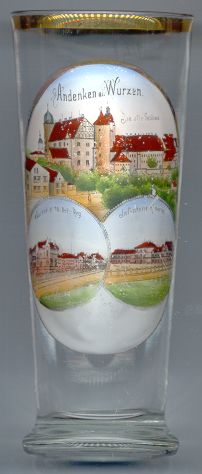
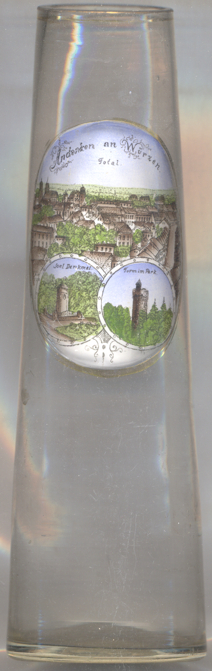
 Wurzen castle [left, no. 1264: top picture, and far right, no. 3622]
was built in 1491–1497 as a secondary residence of the bishops of Meißen. It ceased to be a residence in 1581
when the last Catholic bishop abdicated and converted to the Protestant faith. The castle thereafter (until 1856) served as
the seat of the 'Stiftsamt', the administration of the Electorate (later Kingdom) of Saxony responsible for the territory of
the former bishopric. Later on, it was used by the local district court and after 1945 also by the police. In 2002 it was
purchased by private owners and today houses a restaurant and hotel.
Wurzen castle [left, no. 1264: top picture, and far right, no. 3622]
was built in 1491–1497 as a secondary residence of the bishops of Meißen. It ceased to be a residence in 1581
when the last Catholic bishop abdicated and converted to the Protestant faith. The castle thereafter (until 1856) served as
the seat of the 'Stiftsamt', the administration of the Electorate (later Kingdom) of Saxony responsible for the territory of
the former bishopric. Later on, it was used by the local district court and after 1945 also by the police. In 2002 it was
purchased by private owners and today houses a restaurant and hotel.
The two bottom pictures on glass no. 1264 [left] show the
barracks infantry
The monument for Georg Juel [right, no. 3395: bottom left picture]
was created in 1908. Juel (1840–1900) was an entrepreneur and regional politician. He was made an honorary citizen
of Wurzen in 1891. The monument was demolished in 1973.
The 'Mäseturm' ('Mouse Tower') [right, no. 3395: bottom right picture]
in the municipal park was built in 1888 in 'medieval' style. The tower originally served as a lookout tower; however, it
has been closed to the public since 1988.
The German poet Joachim Ringelnatz (1883–1934; real name Hans Bötticher) was born in Wurzen.
In 1983 a museum was opened in his birth house.
[https://de.wikipedia.org/wiki/Wurzen;
https://de.wikipedia.org/wiki/Schloss_Wurzen;
https://de.wikipedia.org/wiki/Georg_Juel;
http://www.lvz.de/Region/Wurzen/Inventur-im-Stadtpark-Die-gruene-Lunge-von-Wurzen-wird-vermessen-und-kartiert]
![[scale]](lineal.jpg)