
|
|
| DEUTSCHLAND | GERMANY |
| Bundesland: Baden-Württemberg | |
| Regierungsbezirk: Karlsruhe | |
| Landkreis: Neckar-Odenwald-Kreis |
map →
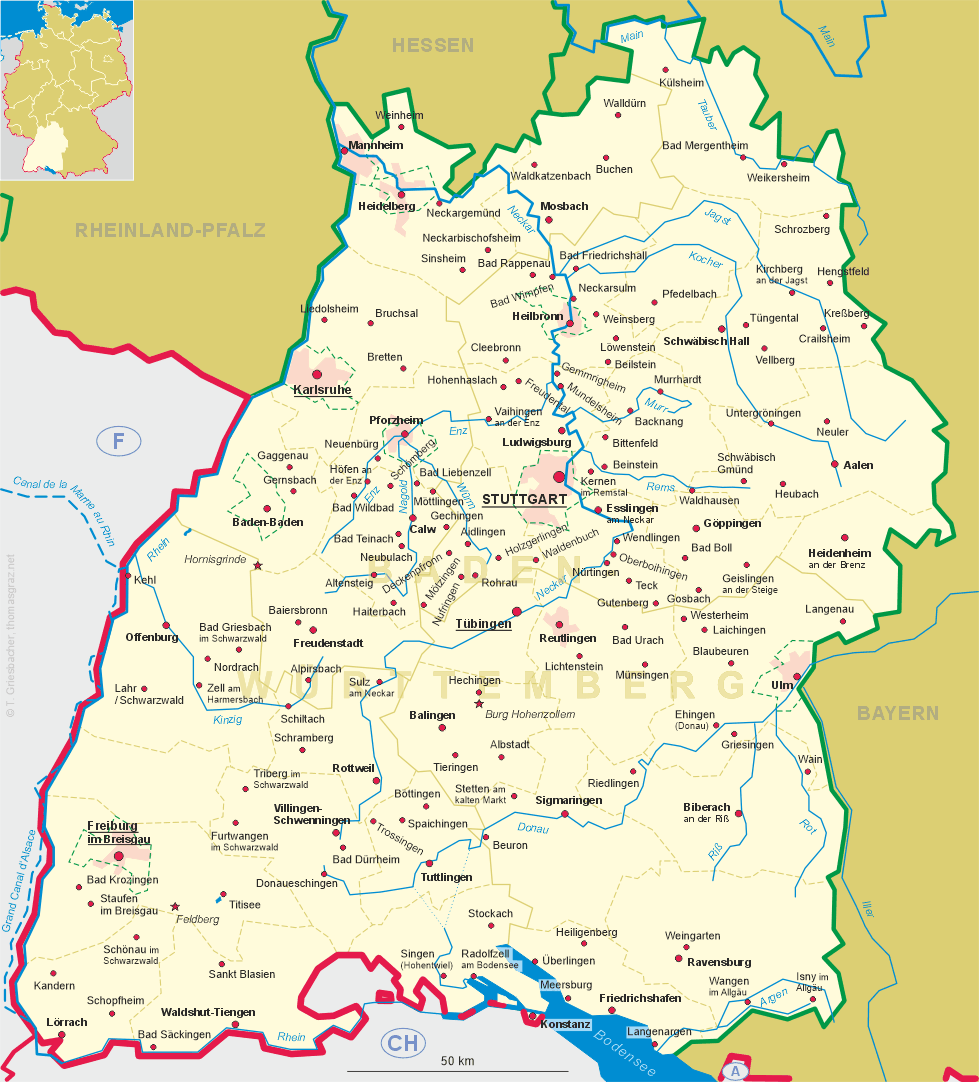
Walldürn is situated at an elevation of 416 m in the nature reserve Neckartal-Odenwald of northern Baden-Württemberg.
The area was already inhabited by Celtic tribes in the 7th century BC who were folled by Germanic tribes around 100 BC. The Romans conquered the area around AD 150 but were defeated by the Alemanni in 232. Monks from the monastery of Amorbach came here in the 8th century. The earliest mention of Turninu or Turninen is found in a documents of 794 and 813. Dürn, as the settlement was called by then, was chartered after 1250. In 1294 the town came in possession of the archbishops of Mainz. The earliest mention of the modern name Walldürn dates from 1423 and proves that the place was already a pilgrimage site at that time. After the secularisation of 1802/03 Walldürn at first became a property of the Princes of Leiningen but alread in 1806 passed to the Grand Duchy of Baden. The railroad from Seckach to Walldürn was opened in 1887. The remains of the Roman Limes were excavated and preserved in 1969–1971, the Roman bath was excavated in 1972–1974. The villages of Gerolzahn, Glashofen, Hornbach and Kaltenbrunn were incorporated into the municipality in 1975.
 The
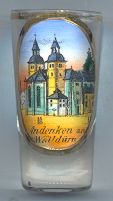
The  pilgrimage church of the Holy Blood (parish church of St. George) [left]
was built in 1698–1728 in Baroque style in place of older churches of the 15th and 17th centuries.
The origin of the pilgrimages was the "Blood miracle" which is said to have occurred in 1330.
According to the legend, a priest had acccidentally spilled the already consecrated wine onto the altar cloth.
The stains had shaped what was recognized as a crucifix surrounded by 11 "veronicae", images of the Lord's head.
The miracle was officially recognized by Pope Eugen IV in 1445.
The church received the Papal title of a Basilica minor in 1962.
Walldürn is the third-largest Catholic pilgrimage site of Germany with about 120,000 visitors per year.
pilgrimage church of the Holy Blood (parish church of St. George) [left]
was built in 1698–1728 in Baroque style in place of older churches of the 15th and 17th centuries.
The origin of the pilgrimages was the "Blood miracle" which is said to have occurred in 1330.
According to the legend, a priest had acccidentally spilled the already consecrated wine onto the altar cloth.
The stains had shaped what was recognized as a crucifix surrounded by 11 "veronicae", images of the Lord's head.
The miracle was officially recognized by Pope Eugen IV in 1445.
The church received the Papal title of a Basilica minor in 1962.
Walldürn is the third-largest Catholic pilgrimage site of Germany with about 120,000 visitors per year.
(see also list of other basilicae minores depicted on glasses of this collection)
![[scale]](lineal.jpg)