
|
|
| ITALIA | ITALY |
| regione: Veneto | Venetia |
| provincia: Venezia |
map →
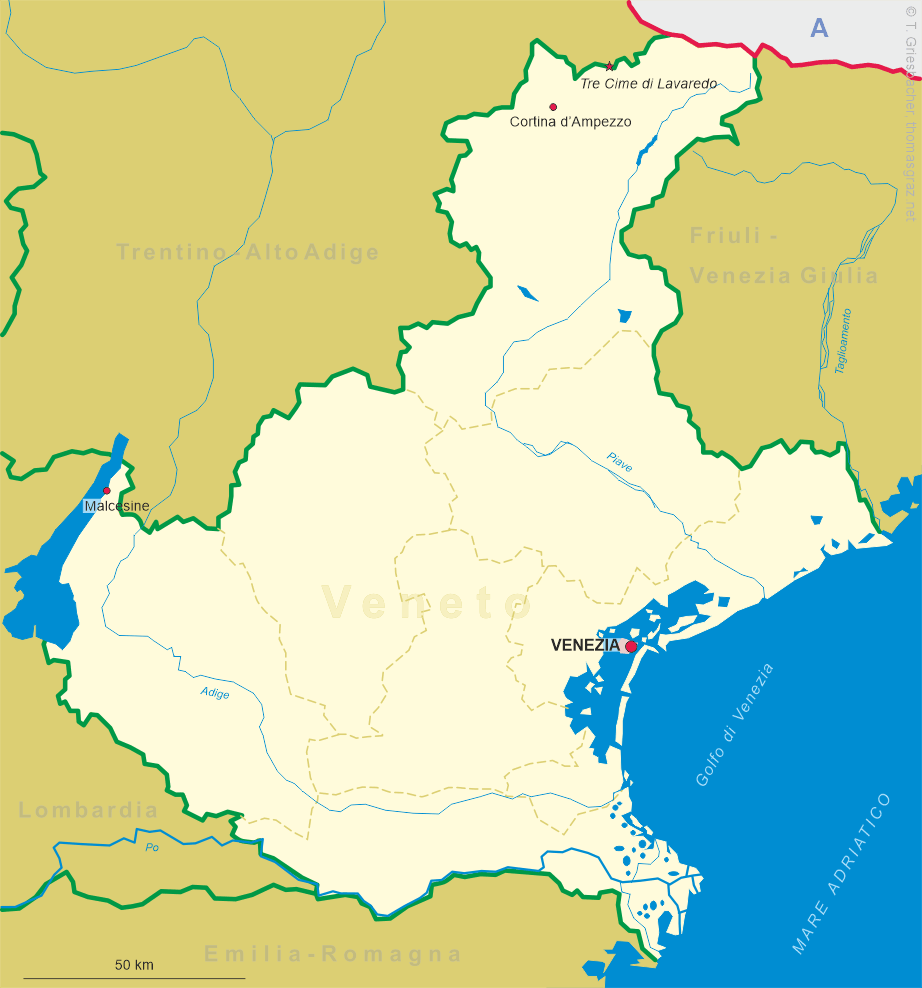
Venice is certainly one of the most fascinating places in Europe. It is located in the centre of the Laguna Véneta, the largest of the northern Italian lagoons. The waters on average are only 50 cm deep and are riddled with numberless islands and sandbanks. The lagoon was formed during tens of thousands of years by the rivers Sile, Brenta and Piave. Their sediments formed the extended streches of land closing the lagoon towards the Gulf of Venice. Only three openings, called 'porti', allow the exchange of water with the open sea. The historical centre of Venice developed on numerous islands in the centre of the lagoon. During the 13th century the people of Venice started to replace their wooden buildings by stone edifices. In order to build their magnificent palaces uncountable numbers of oak trees were felled at the Dalmatian coast (which since that time is largely bare of vegetation). The trees were cut into poles that were driven into the underwater ground to support the wood, brick and marble layers that served as foundations. The historic centre of Venice is composed of about 10,000 buildings, separated by 150 canals, which are spanned by 411 bridges. Venice and its lagoon were listed as a UNESCO World Heritage site in 1987 (see also list of other UNESCO heritage sites).
 The early period of of the history of Venice began with Attila's Hun invasion of the mainland in 452 AD, which caused
the population of the countryside to take refuge on the islands of the lagoon and augment the local population of fishermen.
The first council of 12 townships in the lagoon was formed in 466 and the mainland settlements were abandoned in 568 during
Alboin's Lombard invasion. The election of the first Doge in 727 finally marks the foundation of the Republic of Venice.
The settlement at Rivo Alto (Ri'Alto), the location of modern Venice, was consolidated in 810 during the invasion of king
Pepin of Italy (Pepin Carloman). After the turn of the first millenium, the period of expansion of the Venetian empire began. Dalmatia was
conquered in 1000, follwed by the capture in 1204 of Constantinople by Venice and the 4th Crusaders, which again increased
the territory of Venice in the eastern Adriatic. The period between 1255 and 1380 was marked by four wars with the rivaling
republic of Genova (Genoa). During the 14th and 15th century Venice mainly expanded on the mainland: Treviso in
1339/1388, Padua, Vicenza and Verona in 1404, Aquilea and Friuli in 1418/1421, the bay of Cattaro (Kotor)
with the exception of Castelnuovo (Herceg Novi) in 1420, Brescia and Bergamo in 1428, Rovigo
and Polesine in 1484. Constantinople was lost to the Ottomans in 1453, but Cyprus was conquered in 1489. The discovery of
America by Columbus for Spain in 1492 and the discovery of the Cape route to the East for Portugal by da Gama in 1497
marked the beginning of the period of decline of the Venetian power. The Leage of Cambrai, a confederation formed in 1508 by
the Papal States, France, Spain, Hungary and others, inflicted a decisive defeat upon Venice in 1509. The Ottoman empire
finally reconquered Cyprus in 1571, Crete in 1669, and Morea in 1716. The invasion of the French army under Napoleon in 1797
and the surrender of the Great Council of Venice on the 12th of May of that year ended the existence of the Republic of
Venice after 1,070 years. Between 1815 and 1866 Venice, together with the rest of Venetia and Friuli, was part of the
Austrian kingdom of Lombardy and Venetia, which in 1859/1866 became part of Italy (see also the map
of the Austrian possessions in Italy 1815–1866).
The early period of of the history of Venice began with Attila's Hun invasion of the mainland in 452 AD, which caused
the population of the countryside to take refuge on the islands of the lagoon and augment the local population of fishermen.
The first council of 12 townships in the lagoon was formed in 466 and the mainland settlements were abandoned in 568 during
Alboin's Lombard invasion. The election of the first Doge in 727 finally marks the foundation of the Republic of Venice.
The settlement at Rivo Alto (Ri'Alto), the location of modern Venice, was consolidated in 810 during the invasion of king
Pepin of Italy (Pepin Carloman). After the turn of the first millenium, the period of expansion of the Venetian empire began. Dalmatia was
conquered in 1000, follwed by the capture in 1204 of Constantinople by Venice and the 4th Crusaders, which again increased
the territory of Venice in the eastern Adriatic. The period between 1255 and 1380 was marked by four wars with the rivaling
republic of Genova (Genoa). During the 14th and 15th century Venice mainly expanded on the mainland: Treviso in
1339/1388, Padua, Vicenza and Verona in 1404, Aquilea and Friuli in 1418/1421, the bay of Cattaro (Kotor)
with the exception of Castelnuovo (Herceg Novi) in 1420, Brescia and Bergamo in 1428, Rovigo
and Polesine in 1484. Constantinople was lost to the Ottomans in 1453, but Cyprus was conquered in 1489. The discovery of
America by Columbus for Spain in 1492 and the discovery of the Cape route to the East for Portugal by da Gama in 1497
marked the beginning of the period of decline of the Venetian power. The Leage of Cambrai, a confederation formed in 1508 by
the Papal States, France, Spain, Hungary and others, inflicted a decisive defeat upon Venice in 1509. The Ottoman empire
finally reconquered Cyprus in 1571, Crete in 1669, and Morea in 1716. The invasion of the French army under Napoleon in 1797
and the surrender of the Great Council of Venice on the 12th of May of that year ended the existence of the Republic of
Venice after 1,070 years. Between 1815 and 1866 Venice, together with the rest of Venetia and Friuli, was part of the
Austrian kingdom of Lombardy and Venetia, which in 1859/1866 became part of Italy (see also the map
of the Austrian possessions in Italy 1815–1866).

 The
The  Basilica Cattedrale Patriarchale di San Marco is certainly one of the most famous landmarks of Venice.
The original church on this spot was begun in 829 and was consecrated in 832 in order to enshrine the remains of St. Mark the Evangelist,
which had been brought to Venice from Alexandria in Egypt. Thereupon, St. Mark replaced St. Theodore
as the patron saint of the city and his attribute, the winged lion, became the official symbol of the republic. The first basilica was
destroyed during a popular revolt in 976, but was subsequently replaced by the present church, which was completed in 1071.
The relics of St. Mark had been lost in the fire of 976 but had miraculously "reappeared" when the new church was consecrated in 1094.
The edifice was built in Byzantine style on a ground plan of a greek cross surmounted by five domes. Throughout the following centuries
the church was enriched by numerous artworks. The famous four bronze horses on the west façade were brought to
Venice from Constantinople in 1204 during the 4th Crusade. They were originally placed in the Arsenal of Venice and were set up
on the exterior of the basilica in the mid-13th century. The sculptures were removed to Paris by
Napoleon, but were returned to the church in 1815. The interior of the church is decorated by numerous mosaics on gold ground,
the floor is inlaid with marble and glass. The screen separating the choir and the nave holds marble statues, which count as
masterpieces of Venetian Gothic sculpture. The church originally was not a cathedral but served as the Doge's chapel.
It did not become a cathedral until 1807 when the seat of the patriarchs was transferred from Castello to Venice.
Basilica Cattedrale Patriarchale di San Marco is certainly one of the most famous landmarks of Venice.
The original church on this spot was begun in 829 and was consecrated in 832 in order to enshrine the remains of St. Mark the Evangelist,
which had been brought to Venice from Alexandria in Egypt. Thereupon, St. Mark replaced St. Theodore
as the patron saint of the city and his attribute, the winged lion, became the official symbol of the republic. The first basilica was
destroyed during a popular revolt in 976, but was subsequently replaced by the present church, which was completed in 1071.
The relics of St. Mark had been lost in the fire of 976 but had miraculously "reappeared" when the new church was consecrated in 1094.
The edifice was built in Byzantine style on a ground plan of a greek cross surmounted by five domes. Throughout the following centuries
the church was enriched by numerous artworks. The famous four bronze horses on the west façade were brought to
Venice from Constantinople in 1204 during the 4th Crusade. They were originally placed in the Arsenal of Venice and were set up
on the exterior of the basilica in the mid-13th century. The sculptures were removed to Paris by
Napoleon, but were returned to the church in 1815. The interior of the church is decorated by numerous mosaics on gold ground,
the floor is inlaid with marble and glass. The screen separating the choir and the nave holds marble statues, which count as
masterpieces of Venetian Gothic sculpture. The church originally was not a cathedral but served as the Doge's chapel.
It did not become a cathedral until 1807 when the seat of the patriarchs was transferred from Castello to Venice.
A note on the labelling on the glass no. 1533 [far left]: Although the glass is labelled in Italian, it is apparent that the craftsman who drew the original drawing
for the print was not familiar with the Italian language because "Chiesa S. Marco" is falsely spelled 'Marko' instead of 'Marco'.
 The Lion of Venice [centre]
is an ancient bronze winged lion sculpture in the Piazzetta San Marco, which came to symbolise the city — and of course
of one of its patron Saint, St. Mark — after its arrival there in the 12th century.
The Lion of Venice surmounts one of two large granite columns in the Square, thought to have been erected about 1268, bearing ancient symbols of
the two patron saints of Venice. The Lion sculpture has had a very long and obscure history, probably starting its existence as a winged lion-griffin
statue on a monument to the god Sandon at Tarsus in Cilicia (Southern Turkey) about 300 BC. The figure, which stands on the eastern column, at some
point came to represent the “Lion of Saint Mark”, traditional symbol of Saint Mark the evangelist.
The Lion of Venice [centre]
is an ancient bronze winged lion sculpture in the Piazzetta San Marco, which came to symbolise the city — and of course
of one of its patron Saint, St. Mark — after its arrival there in the 12th century.
The Lion of Venice surmounts one of two large granite columns in the Square, thought to have been erected about 1268, bearing ancient symbols of
the two patron saints of Venice. The Lion sculpture has had a very long and obscure history, probably starting its existence as a winged lion-griffin
statue on a monument to the god Sandon at Tarsus in Cilicia (Southern Turkey) about 300 BC. The figure, which stands on the eastern column, at some
point came to represent the “Lion of Saint Mark”, traditional symbol of Saint Mark the evangelist.
The figure standing on the western column [right, barely visible] is
St. Theodore
San Giorgio Maggiore [background] is a Benedictine church on the island of the same name located in the lagoon
opposite the Piazzetta. The island was occupied by the Venetians already in the Roman period. By 829 it had a church consecrated to St. George; thus, it was
designated as San Giorgio Maggiore to be distinguished from San Giorgio in Alga (an island in the Venetian lagoon).
The San Giorgio Monastery was established in 982. The present church was built by Andrea Palladio between 1566 and 1610.
The campanile (belltower) was first built in 1467, but fell in 1774. It was rebuilt in neo-classical style in 1791.
In the early 19th century, after the Republic fell, the monastery was almost suppressed and the island became a
free port with a new harbour built in 1812. It became the home of Venice's artillery.
[https://en.wikipedia.org/wiki/San_Giorgio_Maggiore, https://en.wikipedia.org/wiki/Church_of_San_Giorgio_Maggiore]

 St. Mark's Campanile [left, no. 2778, and right, no. 3247]
is the bell tower of St Mark's Basilica (see above), located in the Piazza San Marco. It is one of the most recognizable symbols of the city.
The tower is 98.6 metres (tall, and stands alone in a corner of St Mark's Square, near the front of the basilica. It has a simple form, the bulk of which is a
fluted brick square shaft, 12 metres wide on each side and 50 metres (tall, above which is a loggia surrounding the belfry, housing five bells. The belfry is
topped by a cube, alternate faces of which show the Lion of St. Mark and the female representation of Venice ("la Giustizia", Justice). The tower is capped by a
pyramidal spire, at the top of which sits a golden weathervane in the form of the archangel Gabriel.
The initial 9th-century construction, built on Roman foundations, was used as a watch tower or lighthouse for the dock, which then occupied a substantial part of
the area which is now the Piazzetta. Construction was finished in the 12th century. Seriously damaged by a fire in 1489 that destroyed the wooden spire, the campanile
assumed its definitive shape in the 16th century thanks to the restorations made to repair further damage caused by the earthquake of March 1511.
The work was completed on 6 July 1513, with the placement of the gilded wooden statue of the Archangel Gabriel.
The original Campanile inspired the designs of other towers worldwide, especially in the areas belonging to the former Republic of Venice. Almost identical, albeit smaller,
replicas of the campanile exist in the Slovenian town of Piran and in the Croatian town of Rovinj; both were built in the early 17th century.
In July 1902, the north wall of the tower began to show signs of a dangerous crack that in the following days continued to grow. Finally, on Monday, 14 July, around 9:45 am,
the campanile collapsed completely. Remarkably, no one was killed. Because of the campanile's position, the resulting damage was relatively limited.
The same evening, the communal council approved over 500,000 Lire for the reconstruction of the campanile. It was decided to rebuild the tower exactly as it was, with some
internal reinforcement to prevent future collapse. The new campanile was inaugurated on 25 April 1912, on the occasion of Saint Mark's feast day, exactly 1000 years
after the foundations of the original building had allegedly been laid.
St. Mark's Campanile [left, no. 2778, and right, no. 3247]
is the bell tower of St Mark's Basilica (see above), located in the Piazza San Marco. It is one of the most recognizable symbols of the city.
The tower is 98.6 metres (tall, and stands alone in a corner of St Mark's Square, near the front of the basilica. It has a simple form, the bulk of which is a
fluted brick square shaft, 12 metres wide on each side and 50 metres (tall, above which is a loggia surrounding the belfry, housing five bells. The belfry is
topped by a cube, alternate faces of which show the Lion of St. Mark and the female representation of Venice ("la Giustizia", Justice). The tower is capped by a
pyramidal spire, at the top of which sits a golden weathervane in the form of the archangel Gabriel.
The initial 9th-century construction, built on Roman foundations, was used as a watch tower or lighthouse for the dock, which then occupied a substantial part of
the area which is now the Piazzetta. Construction was finished in the 12th century. Seriously damaged by a fire in 1489 that destroyed the wooden spire, the campanile
assumed its definitive shape in the 16th century thanks to the restorations made to repair further damage caused by the earthquake of March 1511.
The work was completed on 6 July 1513, with the placement of the gilded wooden statue of the Archangel Gabriel.
The original Campanile inspired the designs of other towers worldwide, especially in the areas belonging to the former Republic of Venice. Almost identical, albeit smaller,
replicas of the campanile exist in the Slovenian town of Piran and in the Croatian town of Rovinj; both were built in the early 17th century.
In July 1902, the north wall of the tower began to show signs of a dangerous crack that in the following days continued to grow. Finally, on Monday, 14 July, around 9:45 am,
the campanile collapsed completely. Remarkably, no one was killed. Because of the campanile's position, the resulting damage was relatively limited.
The same evening, the communal council approved over 500,000 Lire for the reconstruction of the campanile. It was decided to rebuild the tower exactly as it was, with some
internal reinforcement to prevent future collapse. The new campanile was inaugurated on 25 April 1912, on the occasion of Saint Mark's feast day, exactly 1000 years
after the foundations of the original building had allegedly been laid.
[http://en.wikipedia.org/wiki/St_Mark's_Campanile]

 The Doge's Palace [left, no. 2778: centre], built in Venetian Gothic style, also is one of the main landmarks of the city of Venice.
The palace was the residence of the Doge of Venice, the supreme authority of the Republic of Venice. In 810 the seat of government was moved from the island of Malamocco to the area of the present-day Rialto;
However, no traces remain of that 9th century building as the palace was partially destroyed in the 10th century. A new palace was thenbuilt in the late 12th century out of fortresses,
one façade to the Piazzeta, the other overlooking the St. Mark's Basin. Although only few traces remain of that palace, some Byzantine-Venetian architecture characteristics can still
be seen at the ground floor. The new Gothic palace's constructions started around 1340, focusing mostly on the side of the building facing the lagoon. Only in 1424, did Doge Francesco Foscari
decide to extend the rebuilding works to the wing overlooking the Piazzetta, and with a ground floor arcade on the outside, open first floor loggias running along the façade, and the
internal courtyard side of the wing, completed with the construction of the Porta della Carta (1442). In 1483, a violent fire broke out in the side of the palace overlooking the canal, where the
Doge's Apartments were. An entire new structure was raised alongside the canal, stretching from the ponte della Canonica to the Ponte della Paglia. Another huge fire in 1547 destroyed
some of the rooms on the second floor, but fortunately without undermining the structure as a whole. Refurbishment works were being held at the palace when on 1577 a third fire destroyed
the Scrutinio Room and the Great Council Chamber. In the subsequent rebuilding work it was decided to respect the original Gothic style. As well as being the ducal residence, the palace
housed political institutions of the Republic of Venice until the Napoleonic occupation of the city in 1797, when its role inevitably changed. Venice was subjected first to French rule,
then to Austrian, and finally in 1866 it became part of Italy. Over this period, the palace was occupied by various administrative offices as well as housing the Biblioteca Marciana and
other important cultural institutions within the city. By the end of the 19th century, the structure was showing clear signs of decay, and the Italian government set aside significant funds
for its restoration and all public offices were moved elsewhere, with the exception of the State Office for the protection of historical Monuments, which is still housed at the palace's
loggia floor. In 1923, the Italian State, owner of the building, entrusted the management to the Venetian municipality to be run as a museum. Since 1996, the Doge's Palace has been part of
the Venetian museums network, which has been under the management of the Fondazione Musei Civici di Venezia since 2008.
The Doge's Palace [left, no. 2778: centre], built in Venetian Gothic style, also is one of the main landmarks of the city of Venice.
The palace was the residence of the Doge of Venice, the supreme authority of the Republic of Venice. In 810 the seat of government was moved from the island of Malamocco to the area of the present-day Rialto;
However, no traces remain of that 9th century building as the palace was partially destroyed in the 10th century. A new palace was thenbuilt in the late 12th century out of fortresses,
one façade to the Piazzeta, the other overlooking the St. Mark's Basin. Although only few traces remain of that palace, some Byzantine-Venetian architecture characteristics can still
be seen at the ground floor. The new Gothic palace's constructions started around 1340, focusing mostly on the side of the building facing the lagoon. Only in 1424, did Doge Francesco Foscari
decide to extend the rebuilding works to the wing overlooking the Piazzetta, and with a ground floor arcade on the outside, open first floor loggias running along the façade, and the
internal courtyard side of the wing, completed with the construction of the Porta della Carta (1442). In 1483, a violent fire broke out in the side of the palace overlooking the canal, where the
Doge's Apartments were. An entire new structure was raised alongside the canal, stretching from the ponte della Canonica to the Ponte della Paglia. Another huge fire in 1547 destroyed
some of the rooms on the second floor, but fortunately without undermining the structure as a whole. Refurbishment works were being held at the palace when on 1577 a third fire destroyed
the Scrutinio Room and the Great Council Chamber. In the subsequent rebuilding work it was decided to respect the original Gothic style. As well as being the ducal residence, the palace
housed political institutions of the Republic of Venice until the Napoleonic occupation of the city in 1797, when its role inevitably changed. Venice was subjected first to French rule,
then to Austrian, and finally in 1866 it became part of Italy. Over this period, the palace was occupied by various administrative offices as well as housing the Biblioteca Marciana and
other important cultural institutions within the city. By the end of the 19th century, the structure was showing clear signs of decay, and the Italian government set aside significant funds
for its restoration and all public offices were moved elsewhere, with the exception of the State Office for the protection of historical Monuments, which is still housed at the palace's
loggia floor. In 1923, the Italian State, owner of the building, entrusted the management to the Venetian municipality to be run as a museum. Since 1996, the Doge's Palace has been part of
the Venetian museums network, which has been under the management of the Fondazione Musei Civici di Venezia since 2008.
[http://en.wikipedia.org/wiki/Doge's_Palace,_Venice]

The Grand Canal (Canal Grande) is the major water-traffic corridor of the city. It is the final section of the river Brenta.
The banks of the Grand Canal are lined with more than 170 buildings, most of which date to 13th to the 18th century and demonstrate the welfare and art
created by the Republic of Venice. The noble venetian families faced huge expenses to show off their richness in suitable palazzos.
Because most of the city's traffic goes along the Canal rather than across it, only one bridge crossed the canal until the 19th century, the Rialto Bridge (see below).
There are currently two more bridges, the Ponte degli Scalzi and the Ponte dell'Accademia. A fourth, controversial bridge (Ponte della Costituzione) designed by
Santiago Calatrava was opened in 2011, connecting the train station to the vehicle-open area of Piazzale Roma. As was usual in the past, people can still take
a ferry ride across the canal at several points by standing up on the deck of a simple gondola called traghetto.
Most of the palaces emerge from water without pavement. Consequently, one can only tour past the fronts of the buildings on the grand canal by boat.
[http://en.wikipedia.org/wiki/Grand_Canal_(Venice)]
The Basilica di Santa Maria della Salute (Our Lady of Health) [background right], commonly simply known as the Salute,
stands on a narrow finger of land between the Grand Canal and the Bacino di San Marco.
In 1630 Venice experienced an unusually devastating outbreak of the plague. As a votive offering for the city's deliverance from the pestilence, the Republic of Venice
vowed to build and dedicate a church to Our Lady of Health (or of Deliverance, Italian: Salute). The church was designed in the then fashionable Baroque style by
Baldassare Longhena, a pupil of the Venetian architect Andrea Palladio, and construction began in 1631. Most of the objects of art housed in the church bear references
to the Black Death. The dome of the Salute was an important addition to the Venice skyline and soon became emblematic of the city, inspiring artists like Canaletto,
[http://en.wikipedia.org/wiki/Santa_Maria_della_Salute]


The Ponte di Rialto is one of the best-known sights of Venice.
It was built in 1588–1591 by Antonio da Ponte who had won the contract against such eminent architects as Michelangelo and Palladio.
The marble bridge (48 m long, 22 m wide, span height 7.5 m) which
spans the Canal Grande at its narrowest spot remained the only bridge across the canal for more than 250 years until the
Accademia Bridge was built in 1854. Each of the two bridge heads was built on a foundation of 6,000 piles. The bridge has three walkways:
two along the outside ballustrades and a wider, central one between two rows of small shops.
 The tower depicted in the right background of the picture on glass no. 2987 [near left] belongs to the
Chiesa
The tower depicted in the right background of the picture on glass no. 2987 [near left] belongs to the
Chiesa
[https://en.wikipedia.org/wiki/San_Bartolomeo,_Venice]
Glasses no. 2986, 2987 and 2988 (see already above) are labeled as souvenirs for Pauly & C.
[https://en.wikipedia.org/wiki/Pauly_&_C._–_Compagnia_Venezia_Murano]
As the three glasses are typical souvenir items it is not likely that
![[scale]](lineal.jpg)