
|
|
| DEUTSCHLAND | GERMANY |
| Bundesland: Niedersachsen | Lower Saxony |
| Stadt: Oldenburg (Oldb) |
map →
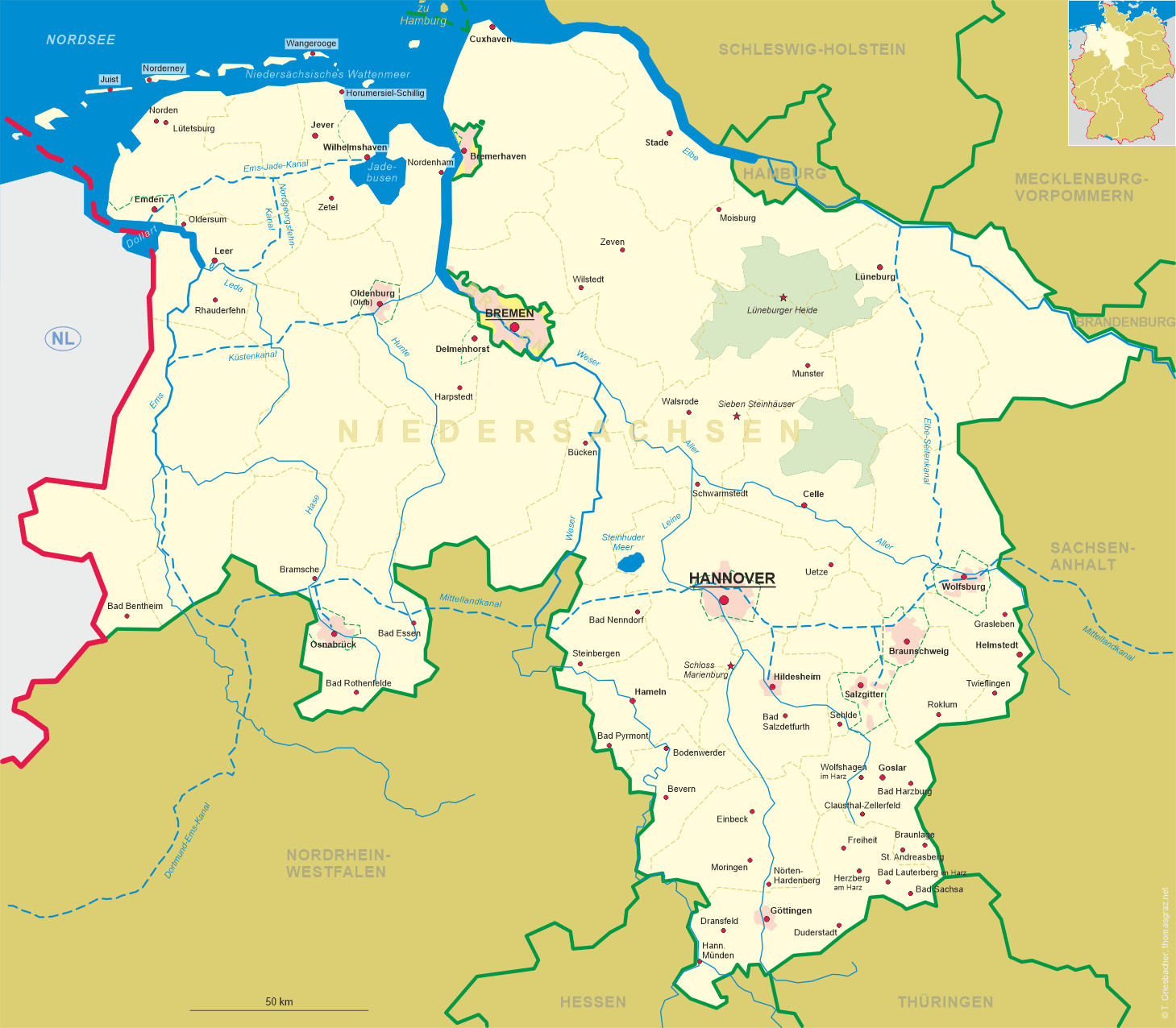
Oldenburg (Oldb) is situated at an elevation of 5 m at the river Hunte in the heart of the Oldenburger Land region of western Lower Saxony. The city of Oldenburg is administered as a district in its own right and was the administrative seat of the administrative region Weser-Ems until 31 December 2004, when the administrative regions of Lower Saxony were dissolved. Since the, Oldenburg is the seat of a government representation of Lower Saxony. The city has a population of about 161,400 (2005). According to the charter of the municipality, the official name of the city is "Oldenburg (Oldb)", the Federal Statistical Office of Germany lists the town as "Oldenburg (Oldenburg)". Glass no. 2161 is labeled "Oldenburg i. Gr." ("Oldenburg im Großherzogtum"), a name used during the period of the grand duchy (German: Großherzogtum) of Oldenburg.
 The history of Oldenburg began with the foundation of the castle Aldenburg, first mentioned in 1108.
The castle protected a ford across the river. The settlement that began to develop next to the castle obtained the
privileges of a town in 1345. In 1448, Count Christian of Oldenburg became king of Denmark (Christian I);
he later also became king of Norway (1450), king of Sweden (1457), duke of Schleswig and count of Holstein (1460, 1474
Duke of Holstein). After the death in 1667 of Count Anton Günther, the last of the counts of Oldenburg, the country
became part of Denmark. In 1773, the county was awarded to the dukes of Schleswig-Holstein-Gottorp, and Oldenburg
became the residence town of the new duchy of Oldenburg. During the reign of Duke Peter Friedrich Ludwig (1785–1829)
the town was remodeled in Classicist style. The Congress of Vienna (1815) elevated the duchy
to the rank of a grand duchy (see map).
After World War I and the abdication of Grand Duke Friedrich August II, Oldenburg became the capital of the Free State
of Oldenburg (see map). Between 1933 and 1945 it was the seat of the district Weser-Ems
of the Third Reich (map). Since 1946 Oldenburg is part of the German state of Niedersachsen
(Lower Saxony). The administrative district Oldenburg was merged in 1978 with the administrative districts Aurich and
Osnabrück and Oldenburg became the administrative seat of the new administrative region Weser-Ems, which existed until 2004.
The history of Oldenburg began with the foundation of the castle Aldenburg, first mentioned in 1108.
The castle protected a ford across the river. The settlement that began to develop next to the castle obtained the
privileges of a town in 1345. In 1448, Count Christian of Oldenburg became king of Denmark (Christian I);
he later also became king of Norway (1450), king of Sweden (1457), duke of Schleswig and count of Holstein (1460, 1474
Duke of Holstein). After the death in 1667 of Count Anton Günther, the last of the counts of Oldenburg, the country
became part of Denmark. In 1773, the county was awarded to the dukes of Schleswig-Holstein-Gottorp, and Oldenburg
became the residence town of the new duchy of Oldenburg. During the reign of Duke Peter Friedrich Ludwig (1785–1829)
the town was remodeled in Classicist style. The Congress of Vienna (1815) elevated the duchy
to the rank of a grand duchy (see map).
After World War I and the abdication of Grand Duke Friedrich August II, Oldenburg became the capital of the Free State
of Oldenburg (see map). Between 1933 and 1945 it was the seat of the district Weser-Ems
of the Third Reich (map). Since 1946 Oldenburg is part of the German state of Niedersachsen
(Lower Saxony). The administrative district Oldenburg was merged in 1978 with the administrative districts Aurich and
Osnabrück and Oldenburg became the administrative seat of the new administrative region Weser-Ems, which existed until 2004.
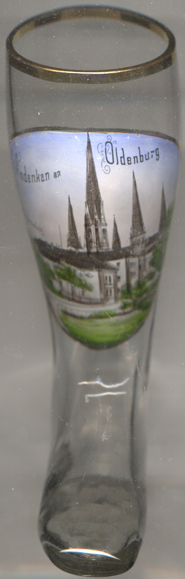
The  church of St. Lambert [left, no. 3911]
is the main church and preaching venue of the bishop of the Evangelical Lutheran Church in Oldenburg. The church dates from
the 13th century and was renovated in the 19th century. It was originally built as a Romanesque hall church between
1155 and 1234. Subsequently, it was altered several times. The outside hides a rotunda-style basilica, based on the Pantheon
in Rome.
[Text adapted from https://en.wikipedia.org/wiki/St_Lambert%27s_Church,_Oldenburg]
church of St. Lambert [left, no. 3911]
is the main church and preaching venue of the bishop of the Evangelical Lutheran Church in Oldenburg. The church dates from
the 13th century and was renovated in the 19th century. It was originally built as a Romanesque hall church between
1155 and 1234. Subsequently, it was altered several times. The outside hides a rotunda-style basilica, based on the Pantheon
in Rome.
[Text adapted from https://en.wikipedia.org/wiki/St_Lambert%27s_Church,_Oldenburg]
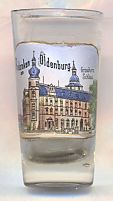
 Oldenburg Castle [left]
is located where in the Middle Ages a moated castle protected a ford across the Hunte river.
The castle was rebuilt in 1607–1615 as a Baroque residence. Further enlargements followed under Danish rule between
1737 and 1753. The northeast wing was added after 1774, the library wing followed in 1817–1821. The last addition
to the structure was the west wing with the large ballroom, built in 1894–1897. With the end of the grand duchy in
1918 the castle ceased to function as a residence. Since 1923 it is home to the Oldenburg State Museum for Art and
Cultural History.
Oldenburg Castle [left]
is located where in the Middle Ages a moated castle protected a ford across the Hunte river.
The castle was rebuilt in 1607–1615 as a Baroque residence. Further enlargements followed under Danish rule between
1737 and 1753. The northeast wing was added after 1774, the library wing followed in 1817–1821. The last addition
to the structure was the west wing with the large ballroom, built in 1894–1897. With the end of the grand duchy in
1918 the castle ceased to function as a residence. Since 1923 it is home to the Oldenburg State Museum for Art and
Cultural History.
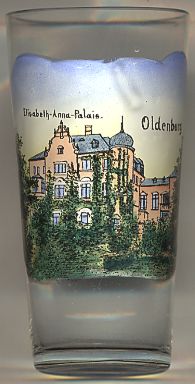
The Elisabeth Anna Palais [right]
was built between 1894 and 1896 for the last ruling grand duke, Friedrich August II of Oldenburg, as the new home of the ducal family.
the architect was Ludwig Freese. In 1895, during construction of the palais Friedrich August's wife Princess Elisabeth Anna of Prussia died
and the new building was named in her memory. On 24 October 1896 the grand duke moved into the new residence with his family and his
second wife Elisabeth Alexandrine Mathilde of Mecklenburg-Schwerin. After the grand duke's resignation in 1918
the Palais was used for other purposes. The kitchen wing to the east of the main building was demolished in the early 1960s to make room for
the new "Schlosswall" street, though the Palais was now sited right on this new road and thus gained a new entrance. The Palais now houses
the Sozialgericht (Social Court) Oldenburg.
[Text adapted from http://en.wikipedia.org/wiki/Elisabeth-Anna-Palais]
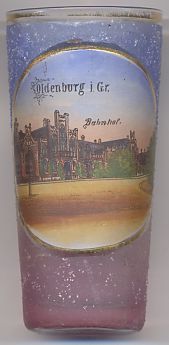
The first railroad in the grand duchy was opened in 1867 and connected Oldenburg with Bremen
via Delmenhorst (Oldenburgische Staatsbahn). Another line led from Oldenburg to Heppens, now
Wilhelmshaven.
The old central
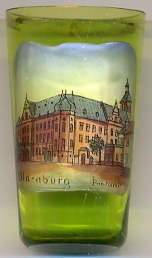
The former Oberpostdirektion [near left] was built in 1901–1902 in Renaissance revival style
by the architect Ernst M. Hake. Extensions to the building were added in 1926, 1989 and 1990. After serving its original purpose
it was used as telecommunications office. The complex is currently (2013) being developed for a future use as a hotel.
[https://www.corpussireo.com/CORPUSSIREO/Presse/Archiv/2013/13_01_11%20Oldenburg%20Oberpostdirektion.aspx,
http://www.nwzonline.de/oldenburg/wirtschaft/kaiserliche-post-soll-hotel-werden_a_2,0,632283501.html,
http://www.glass-portal.privat.t-online.de/hs/g-l/hake_ernst.htm]
![[scale]](lineal.jpg)