
|
|
| POLSKA | POLAND |
| województwo: Dolnośląskie | voivodship: Lower Silesia |
| powiat: Zgorzelec | district: Zgorzelec |
map →
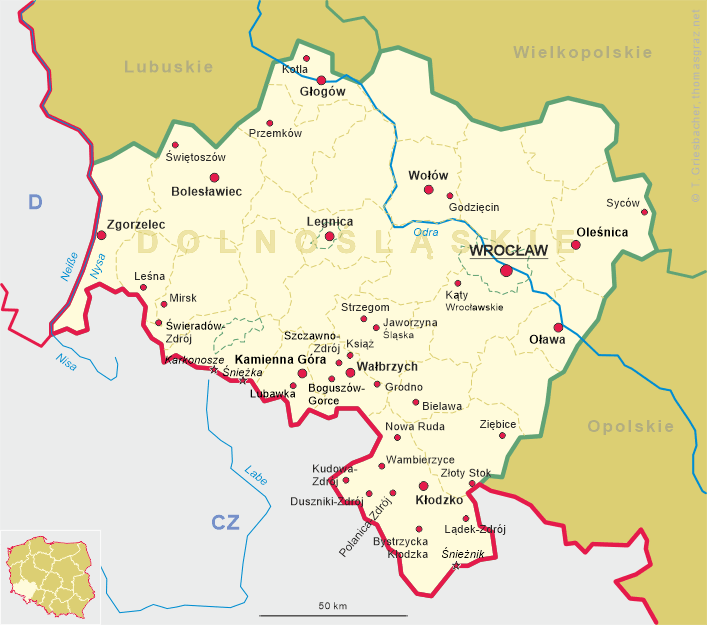

 Zgorzelec (German: Görlitz) is situated at the right bank of the river Nysa Łużycka (German: Lausitzer Neiße) which forms the border between Poland (Lower Silesia) and Germany (Saxony).
The first mentioning in a document dates from 1071 (Goreliz), other old versions of the name include Zhorjelec, Yzhorelik (1071), Gorelic (1266) and Gorlicz (1313).
The village began to develop into a town from 1220 onward, and received a town charter in 1303. In 1341 the town obtained
the privilege via regia, which meant that all tradesmen travelling east had to bring their goods to Zgorzelec/Görlitz first.
From 1076 until 1253 the town belonged to the Kingdom of Bohemia, until 1308 it belonged to the Margraviate of Brandenburg, 1308–1329 it belonged to
the Polish ducal family of the Piasts, between 1329–1625 it was again part of Bohemia, and from then until 1815 it belonged to the Electors (1806 Kings) of Saxony.
From 1815 on, it was part of Prussia. The Potsdam Agreement of 1945 stipulated that the eastern part of the town (Zgorzelic) on the right bank of the river became part of Poland, whereas the
western part (Görlitz) became part of Germany. In 1948 the name Zgorzelic was officially changed to Zgorzelec.
Zgorzelec (German: Görlitz) is situated at the right bank of the river Nysa Łużycka (German: Lausitzer Neiße) which forms the border between Poland (Lower Silesia) and Germany (Saxony).
The first mentioning in a document dates from 1071 (Goreliz), other old versions of the name include Zhorjelec, Yzhorelik (1071), Gorelic (1266) and Gorlicz (1313).
The village began to develop into a town from 1220 onward, and received a town charter in 1303. In 1341 the town obtained
the privilege via regia, which meant that all tradesmen travelling east had to bring their goods to Zgorzelec/Görlitz first.
From 1076 until 1253 the town belonged to the Kingdom of Bohemia, until 1308 it belonged to the Margraviate of Brandenburg, 1308–1329 it belonged to
the Polish ducal family of the Piasts, between 1329–1625 it was again part of Bohemia, and from then until 1815 it belonged to the Electors (1806 Kings) of Saxony.
From 1815 on, it was part of Prussia. The Potsdam Agreement of 1945 stipulated that the eastern part of the town (Zgorzelic) on the right bank of the river became part of Poland, whereas the
western part (Görlitz) became part of Germany. In 1948 the name Zgorzelic was officially changed to Zgorzelec.
The  Ruhmeshalle (Hall of Fame) was built in 1902 and included the Kaiser Wilhelm Museum.
Today it is used as the civic culture house (dom kultury) of Zgorzelec.
Ruhmeshalle (Hall of Fame) was built in 1902 and included the Kaiser Wilhelm Museum.
Today it is used as the civic culture house (dom kultury) of Zgorzelec.
Another glass in this collection was produced as a souvenir for the German Millers' Day at Görlitz / Zgorzelec, 24–24 June 1908, showing a view of the Kwisa (Queis) river dam at Marklissa (today Leśna, Lower Silesia, Poland), located about 50 km southeast of Zgorzelec.
![[scale]](lineal.jpg)