
|
|
| DEUTSCHLAND | GERMANY |
| Bundesland: Hessen | Hesse |
| Regierungsbezirk: Gießen | |
| Landkreis: Limburg-Weilburg |
map →
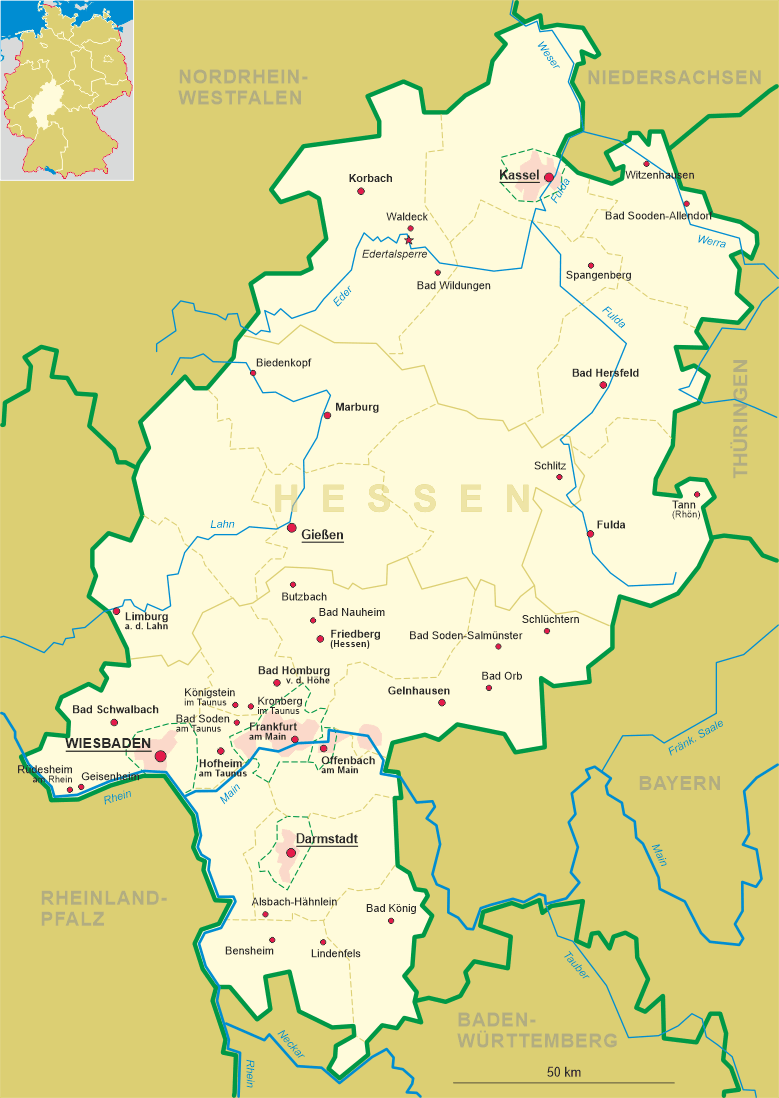
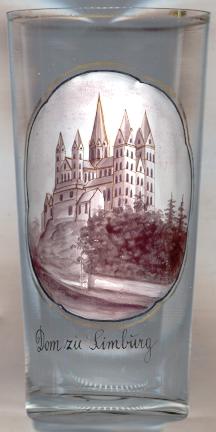
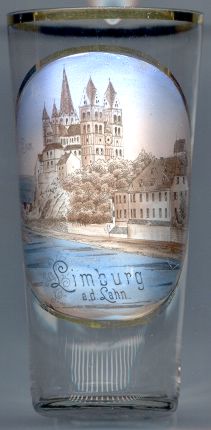 Limburg an der Lahn (officially Limburg a. d. Lahn) began to develop on the river Lahn at the crossroads
of the trading routes from Frankfurt to Siegen and from
Koblenz to Wetzlar. The first menting in a document dates from AD 910 and refers to the foundation
of the collegiate abbey St. Georg. Between 1322 and 1332, the archabbey of Trier came into
possession of Limburg, and in 1420 also obtained the sovereignty over the area. After the secularisation of Trier in 1802/03
Limburg became part of the Duchy of Nassau. Together with Nassau it became part of Prussia in 1866. Since 1945 it belongs to
Germany's state of Hesse.
Limburg an der Lahn (officially Limburg a. d. Lahn) began to develop on the river Lahn at the crossroads
of the trading routes from Frankfurt to Siegen and from
Koblenz to Wetzlar. The first menting in a document dates from AD 910 and refers to the foundation
of the collegiate abbey St. Georg. Between 1322 and 1332, the archabbey of Trier came into
possession of Limburg, and in 1420 also obtained the sovereignty over the area. After the secularisation of Trier in 1802/03
Limburg became part of the Duchy of Nassau. Together with Nassau it became part of Prussia in 1866. Since 1945 it belongs to
Germany's state of Hesse.
The  cathedral Sankt Georg was begun in 1206 in place of the older collegiate church.
The church was consecrated in 1235 as collegiate and parish church. The construction of the church continued until 1280.
During the following centuries no major alterations were made to the building so that it could retain its original Late
Romanesque appearance. Since the foundation in 1821 of the diocese Limburg the church has the rank of a cathedral.
The exterior of the church was renovated in 1969–1973. During the renovation of the interior in 1975–1991
Romanesque frescos from the 13th century were discovered.
cathedral Sankt Georg was begun in 1206 in place of the older collegiate church.
The church was consecrated in 1235 as collegiate and parish church. The construction of the church continued until 1280.
During the following centuries no major alterations were made to the building so that it could retain its original Late
Romanesque appearance. Since the foundation in 1821 of the diocese Limburg the church has the rank of a cathedral.
The exterior of the church was renovated in 1969–1973. During the renovation of the interior in 1975–1991
Romanesque frescos from the 13th century were discovered.
The most important treasures of the church are the Staurothek, a reliquiary of the 2nd half of the 10th century (prior to 963) which contains a particle of the Holy Cross and was stolen by crusaders from the Hagia Sophia in Constantinople in 1204, and the Petri-Stab-Reliquiar of 988, holding parts of the crosier of St. Peter.
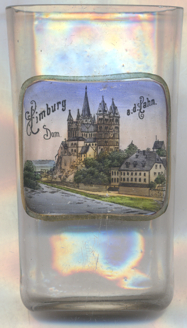
Other places which claim one of the many reliquiaries of particles of the Holy Crucifix and of which there
are glasses in this collection are the
Cistercian abbeys of Heiligenkreuz and Lilienfeld (Austria),
the former monastery Heilig Kreuz in Donauwörth (Germany) and the famous cathedral
Notre-Dame in Paris (France).
![[scale]](lineal.jpg)